Home / Sunday-mid-day / Article /
Saare jahan se accha polyester hamara
Updated On: 14 August, 2022 07:15 AM IST | Mumbai | Yusra Husain
The spectacular idea of Har Ghar Tiranga could have been a critical shot in the arm for the khadi industry and thousands of handloom weavers and spinners, if we had endorsed and contracted hand-spun flags instead of synthetic rip offs





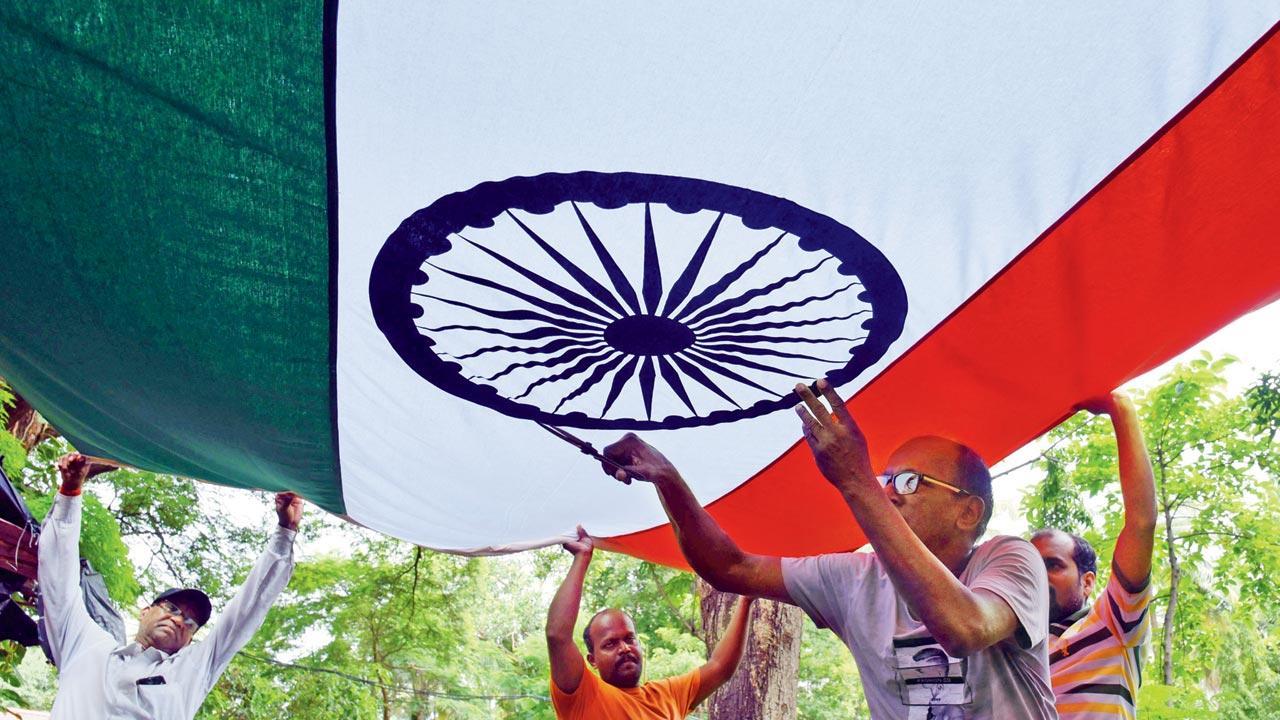
The staff at Khadi Bhandar, Kora Kendra in Borivli West, gives final touches to a khadi Tricolour. Pic/Nimesh Dave
It was 1943. Mahatma Gandhi was still under house arrest by the British in Pune’s Aga Khan Palace along with other freedom fighters of the Quit India Movement. But his directions about the Indian flag to be hoisted on Independence Day that was celebrated by the Congress back then on January 26, were crystal clear. “It does not matter how small it was, as long as it was of khadi and correct in colour,” Gandhi said. The incident was recorded by Mira Behn (British supporter of the Indian independence Movement who left her home in England to live and work with Gandhi) , who was one of those under house arrest, in her letter to author Kshitis Roy later in 1964.
But this Independence Day, with the central government’s Har Ghar Tiranga campaign, which it announced as part of celebrations to mark the 75th year of Indian Independence, it will not matter if you hoist a khadi-made Tricolour or a polyester one stitched on a machine, as long as the colours that make the Indian national flag are apparent and the Ashoka Chakra is in order.
Trending Stories
Latest Photos
Latest Videos
Latest Web Stories
ADVERTISEMENT
Mid-Day Fast
ADVERTISEMENT