Home / Sunday-mid-day / Article /
'Show us the trees!'
Updated On: 24 April, 2022 07:39 AM IST | Mumbai | Jane Borges
Ecologists and green warriors want to know how a city that’s swiftly losing green cover to urban development has managed a spot on UN agency’s Tree Cities of the World list





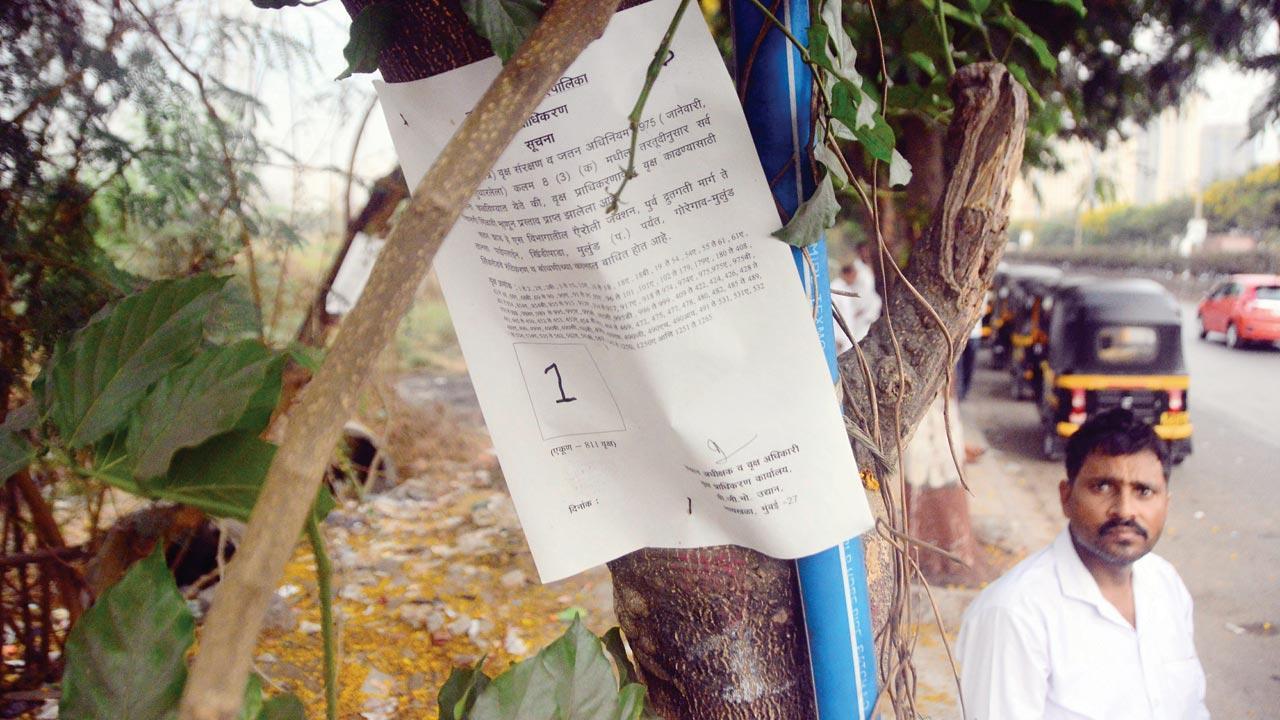
A notice hangs on one of the 1,000 trees on the Goregaon-Mulund Link Road, which have been marked for cutting for a proposed road-widening project. Pic/Sameer Markande
For any city, environmental awards are a reflection of its green health. But, when Mumbai received one such honour recently, it was received with a pinch of salt. The Food and Agriculture Organisation (FAO), a specialised agency of the United Nations, last week recognised Mumbai as one of the 2021 Tree Cities of the World for planting 4,25,000 trees over 25,000 volunteer hours. The metropolis was among 138 cities from across 21 countries to find a mention in the list, sharing space with Hyderabad, the only other Indian city to join this distinguished company. Mumbai’s environmental activists and ecologists though, are hardly impressed. With a major part of the city currently on stilts, either for the ongoing Metro or Coastal Road projects, and swathes of green land taken over for redevelopment, they wonder how Mumbai made the cut.
To receive such a recognition, a city must meet five core standards, including delegating responsibility for the care of trees to a Tree Board; a law or an official policy to govern the management of forests and trees; an updated inventory or assessment of the local tree resource so that an effective long-term plan for planting, care and removal of city trees can be established; a dedicated annual budget for the routine implementation of the tree management plan, and an annual celebration of trees to raise awareness among residents and to acknowledge those who carry out the tree programme. On paper at least, Mumbai fits this criteria. The laws are in place, and so is the sentiment, say experts. But, they aren’t sure if it’s robust enough to guarantee protection of our green cover.
Trending Stories
Latest Photos
Latest Videos
Latest Web Stories
ADVERTISEMENT
Mid-Day Fast
ADVERTISEMENT