






Home / Sunday-mid-day / / Article /
Songs of Sindh: Why more Sindhi musicians are releasing songs in their language
Updated On: 08 June, 2025 10:11 AM IST | Mumbai | Junisha Dama
A new wave of Sindhi musicians are using music to preserve their language and reclaim their cultural identity

Listen to this article :
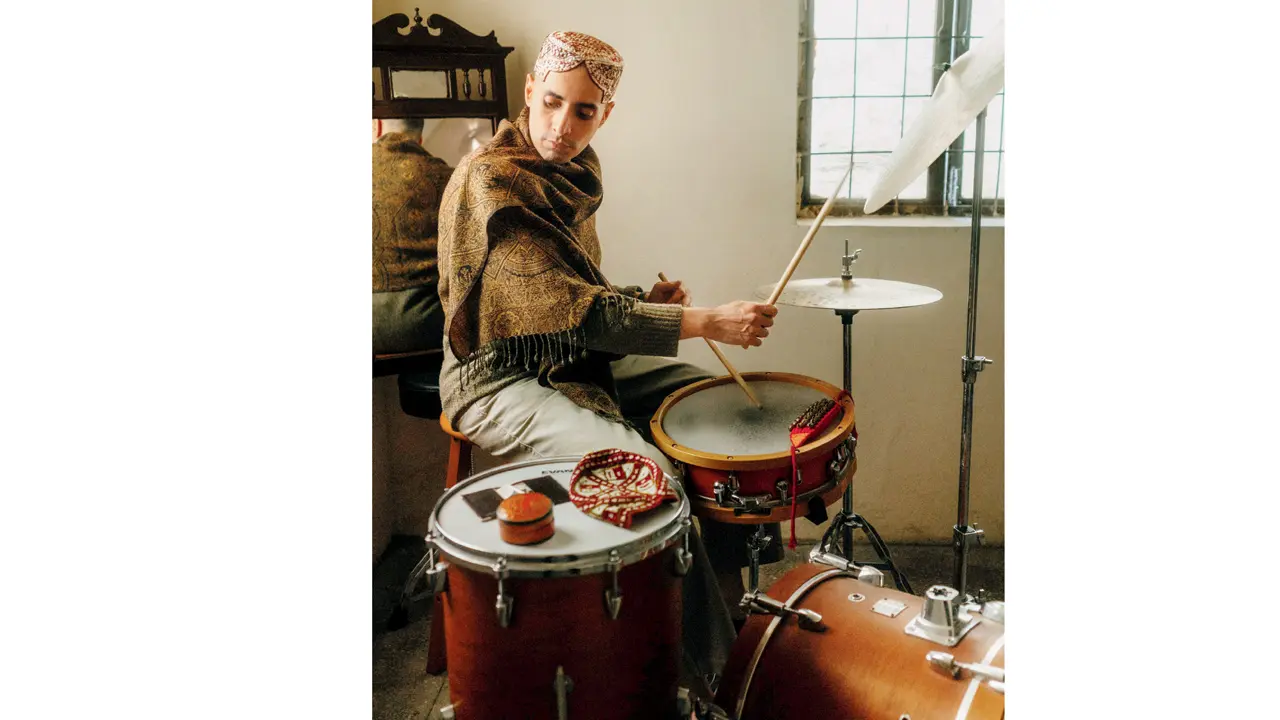
The cover art for Tarun Balani’s new album features his grandfather’s photograph and the album name, Kadhain Milandasi, in the Sindhi script. Pic/Mohit Kapil
Yov’ve probably heard Mast Qalandar in more ways than one, belted out at weddings, looped in remixes, or at a Sufi night. First written by Amir Khusrau in the 13th century, with verses adapted later in the 18th century, this qawwali has defined Sindhi music in the public imagination. Another tune, Ho Jamalo, was written as a celebration song in 1889 and continues to be remixed into several Bollywood numbers and renditions by Sindhi artists.
Sindhis, despite the turn of centuries, have clung to these songs. Post-partition, icons like Ram Panjwani and Master Chander gave the community many poems and ghazals, with Panjwani often playing the matka, commonly used as an instrument in Sindh. A host of other traditional Sindhi instruments did not manage to cross the border.

Andheri-based singer Vandana Nirankari says she began singing in Sindhi to preserve the language. Pic/Satej Shinde
Trending Stories
Latest Photos
Latest Videos
Latest Web Stories
ADVERTISEMENT
Mid-Day Fast
ADVERTISEMENT

ADVERTISEMENT