






Home / Sunday-mid-day / / Article /
The men (and woman) of Indian tennis' Golden age
Updated On: 07 February, 2021 09:14 AM IST | Mumbai | Jane Borges
Anindya Dutta’s new biography of the colonial game in India throws light on the earliest and lesser known heroes of the sport

Listen to this article :
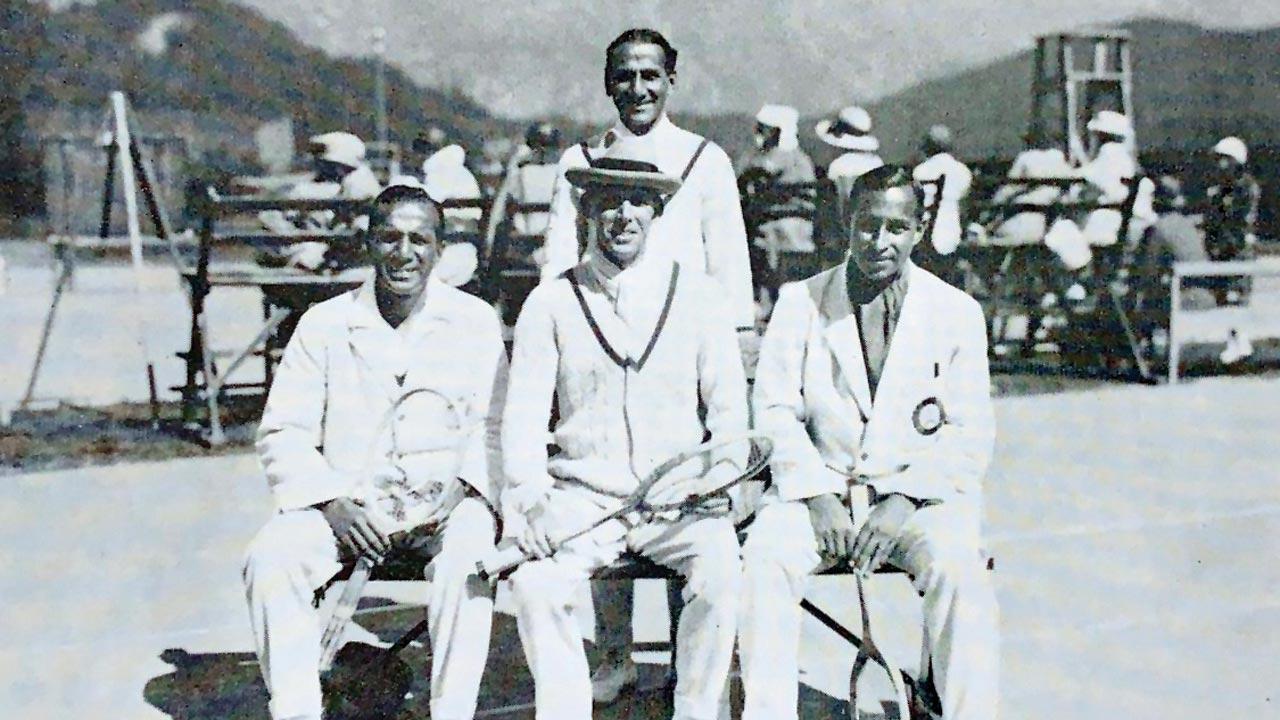
The 1925 Indian Davis Cup team. (Sitting, from left) Dr AA Fyzee, Sydney Jacob and Jagat Mohan Lal; (standing) Dr AH Fyzee. Pics courtesy/Advantage India: The Story of Indian Tennis, Westland Sport
For the most part, cricket minded its own business, except when it came to tennis. Though the game of bat and ball was far removed from the racquet-wielding sport, it did play “a role in how modern tennis evolved in the UK,” shares author and sports historian Anindya Dutta. In the late 1800s, the sub-committee of the Marylebone Cricket Club, the most important sports governing body of the time, had decided on the shape and form of the tennis court, opting for a “rectangular” one over the “hourglass shape” by Major Walter Clopton Wingfield, who is also credited with designing the boxed lawn tennis set in 1874. “Interestingly, it was one of the sub-committee members who came up with the modern tennis ball. Since the vulcanised rubber ball would become wet in the English weather, he asked his wife to cover one in white flannel. That is the ball still in use,” says Dutta.
Closer home in India—then a jewel in the English crown—the two sports stayed out of each other’s hair. “Its rapid expansion [in India] was entirely due to the British civil servants and their families who brought the game to their clubs, from where it gained its popularity.”
Read Next Story
Trending Stories
Latest Photos
Latest Videos
Latest Web Stories
ADVERTISEMENT
Mid-Day Fast
ADVERTISEMENT

ADVERTISEMENT