Home / Sunday-mid-day / / Article /
This novel highlights how heirloom rice varieties are in danger of disappearing
Updated On: 17 August, 2025 09:05 AM IST | Mumbai | Team SMD
A new graphic novel, Our Rice Tastes of Spring, highlights how heirloom rice varieties are in danger of vanishing, as modified white grains take over farmlands




There are several heirloom varieties of rice that that the farmers grow in Jharkhand, such as Ranikajal, Goda-dhan, Chosaarh, and Kalamdaani. These may not always be as profitable to grow as the modified white rice varieties; but, as the author points out, livelihood is not just about making a profit, it’s about being one with the environment
For farmers, rice is not just food; it is tradition, and life itself. Over the course of her career reporting on the impact of social and food policies, Anumeha Yadav has witnessed first-hand how nutritious and hardy heirloom rice varieties are in danger of disappearing, even as the government and seed corporations push modified white grains that strip the soil of nutrients and cost farmers more and more to grow.
During her time living in a hamlet in Jharkhand, however, she noted how Adivasi farmers had stuck to indigenous rice varieties, preserving their food culture, as well as their nutrition and the soil quality. Based on her experience there, Yadav has released a new graphic novel, Our Rice Tastes of Spring, which takes this complex policy issue and presents it simply — through the eyes of Jinid, a little girl growing up in a fictitious farming village in Jharkhand. There, the villagers learn the value of heirloom grains the hard way, and eventually reject the “fortified” and modified grains pushed by the authorities.
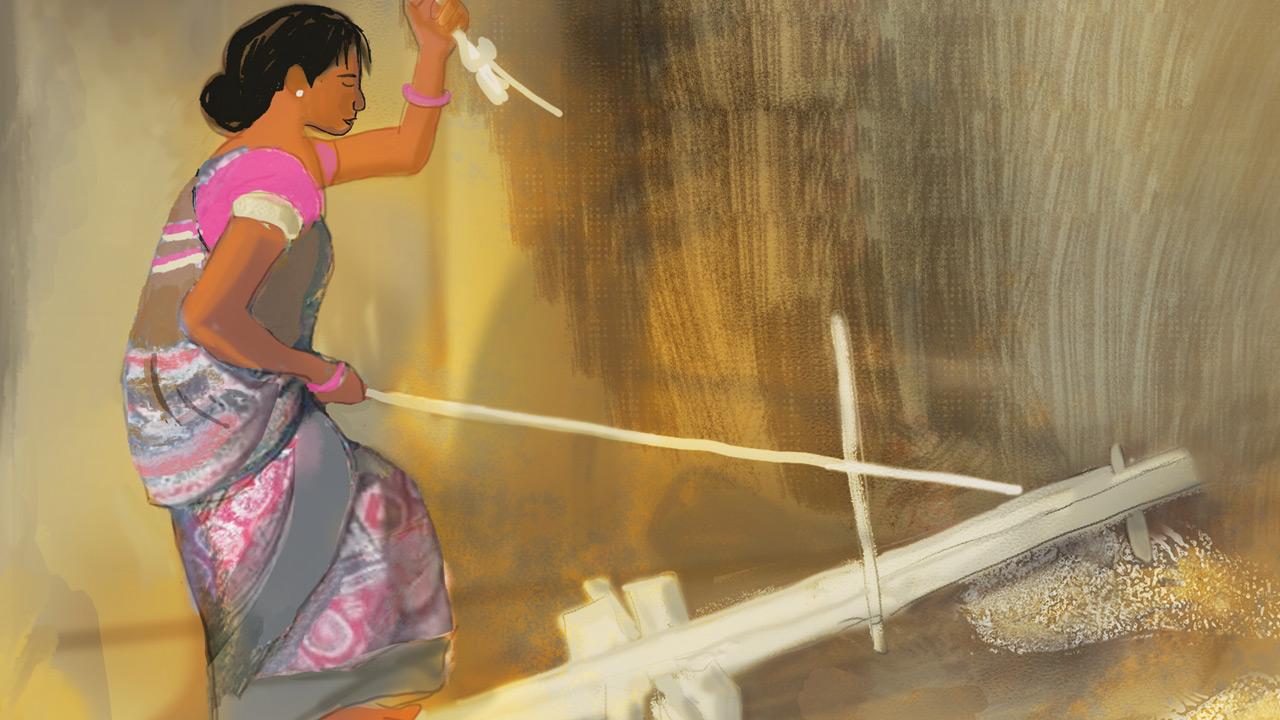
The book shows how the dheki, a wooden equipment,is used to pound the paddy into rice. Pounding the paddy, which is the whole grain, separates the outer husk from the kernel inside, that is then ready to cook and eat
Trending Stories
Latest Photos
Latest Videos
Latest Web Stories
ADVERTISEMENT
Mid-Day Fast
ADVERTISEMENT

ADVERTISEMENT