Home / Sunday-mid-day / Article /
Goa Open Arts Festival: Watch these two Jhaveri sisters perform Manipuri dance
Updated On: 21 January, 2024 06:58 AM IST | Mumbai | Sucheta Chakraborty
In an archiving triumph, the story of the Jhaveri sisters, with Manipuri dance at the centre of it, will open at the Goa Open Arts Festival next month





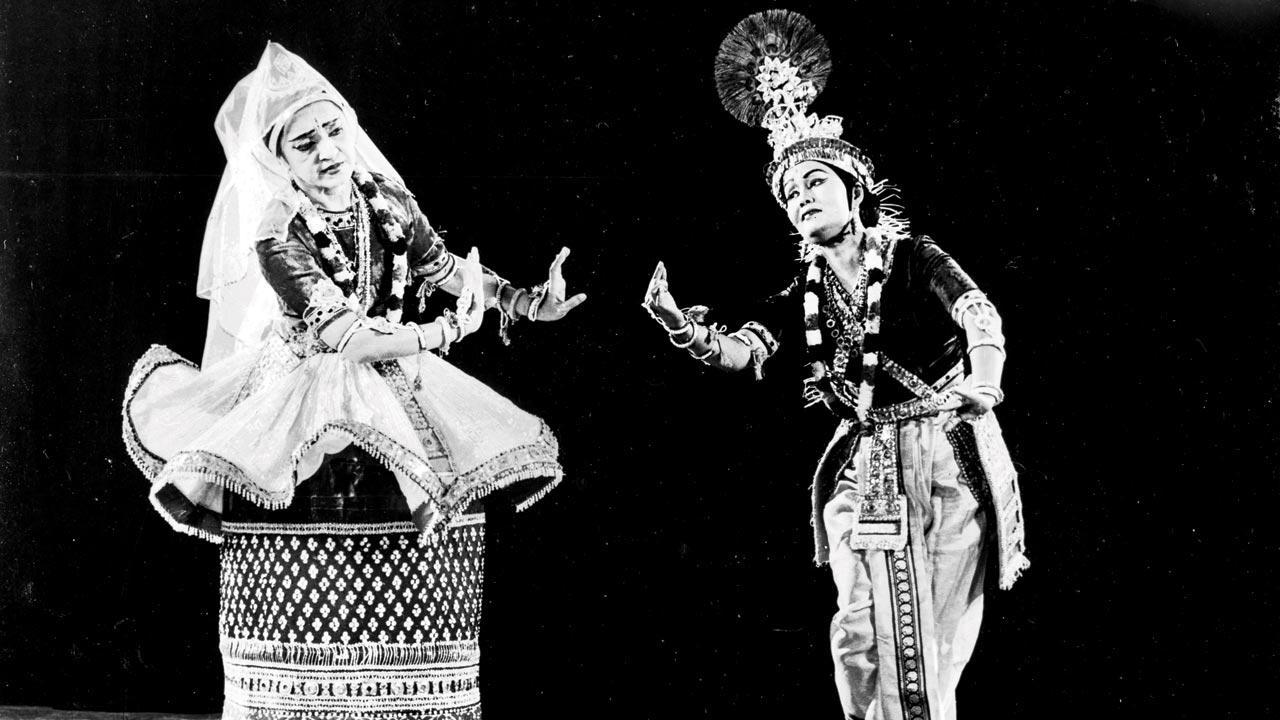
The exhibition Nayana Jhaveri: A Life in Lasya, which is a precursor to a book that will release in 2027, will include archival photos, video, sound, letters, interviews, articles and objects, to celebrate Jhaveri’s life, her dance form Manipuri, her guru and influences. Pic Courtesy/Jhaveri Sisters Archive
They were always very careful to build albums. At that time, it was just those big black paper photo albums, but after every tour, they’d make scrapbooks. Whoever came home just to meet them, would have to sit at the coffee table where the albums were kept and see them. The sisters’ whole world was just dance. They put in a lot of effort to devise systems, however homemade, and were consistently organised,” Angana Jhaveri tells us over the phone from Goa. Angana had originally begun compiling a book on her mother, renowned Manipuri exponent Nayana Jhaveri, the eldest of the celebrated Jhaveri sisters, as a way of commemorating her birth centenary coming up in 2027. But a serendipitous meeting in Goa with photographer, filmmaker and author Alakananda Nag who runs Archival Matter, an initiative focused on discovering history beyond the history books, opened up discussions about larger and more enduring possibilities around the Jhaveri legacy. The two are presently working on “Nayana Jhaveri: A Life in Lasya”, a multi-sensory exhibition that will be on display at the Goa Open Arts Festival next month (February 23-28), and then become part of the Nayana Jhaveri archive. “The collaboration became a new window into the importance of archiving,” admits Angana.
 Padma Shri and Sangeet Natak Akademi awardee Darshana Jhaveri speaks of Guru Bipin Singh’s farsightedness that led them to collect and record oral traditions from Manipur, Cachar, Tripura and other regions and correlate them with Vaishnavite and Indian texts on dance and music. “We knew we had to meet various gurus, learn and record the oral traditions because the gurus would die and with them all these treasure troves of knowledge would be wiped out.” Pic/Sameer Markande
Trending Stories
Latest Photos
Latest Videos
Latest Web Stories
ADVERTISEMENT
Mid-Day Fast
ADVERTISEMENT