Home / Sunday-mid-day / Article /
Truths about Taj
Updated On: 22 May, 2022 08:53 AM IST | Mumbai | Heena Khandelwal
Arched rooms that hold up sloping foundation in Taj Mahal’s basement don’t house Hindu idols. Nothing mysterious or worth maligning the Mughals for, say experts about a monument we should continue to be proud of





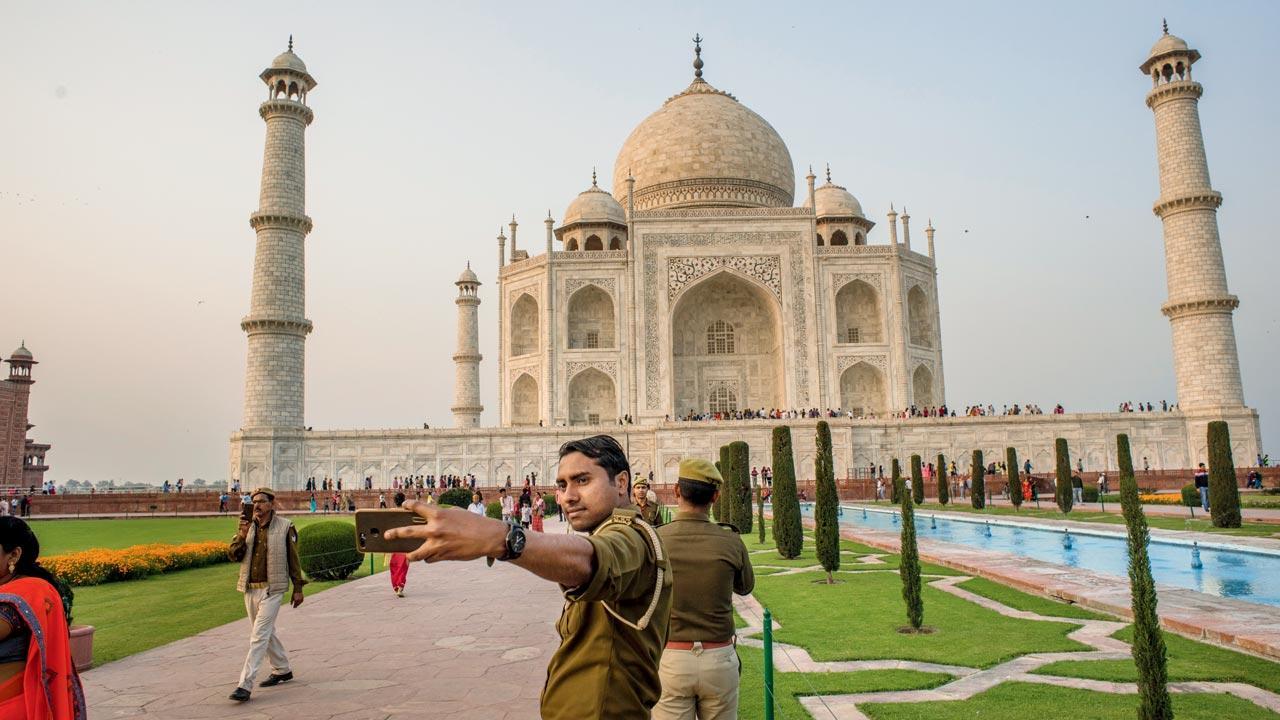
Pic/Getty Images
Back in the 17th century, Mughal emperors didn’t enter the Taj Mahal from the south door that visitors take today. They would cross the Yamuna river by boat to come to a now defunct gate. “The emperor [Shah Jahan] would walk in from the gate on the left of the northern wall, now silted up,” says Delhi-based historian-author Rana Safvi. “He would pass through the galleries and rest in one of the rooms. Amita Baig [heritage management consultant who co-authored Taj Mahal: Multiple Narratives] described these galleries as very well-painted corridors.”
It is these rooms that have been the subject of recent contention. Essentially a mausoleum commissioned by the Mughal emperor Shah Jahan for his favourite wife Mumtaz Mahal, the Taj was built between 1631 and 1648. Recently, a public interest litigation (PIL) was filed in the Allahabad High Court, seeking directives to the Archaeological Survey of India (ASI) to probe the 22 closed rooms under it to ascertain the presence of idols of Hindu deities, refuelling the theory that the Taj was built over Tejo Mahalaya, as claimed by historical revisionist Purushottam Nagesh Oak (PN Oak).
Trending Stories
Latest Photos
Latest Videos
Latest Web Stories
ADVERTISEMENT

Ganeshotsav 2026

ADVERTISEMENT