






Home / Sunday-mid-day / / Article /
‘We need to raise the bar on expectations’
Updated On: 26 September, 2021 08:21 AM IST | Mumbai | Anju Maskeri
Meet India’s new age eco-road constructors who are rolling out innovation in road technology, but wish that governments would take road health more seriously

Listen to this article :
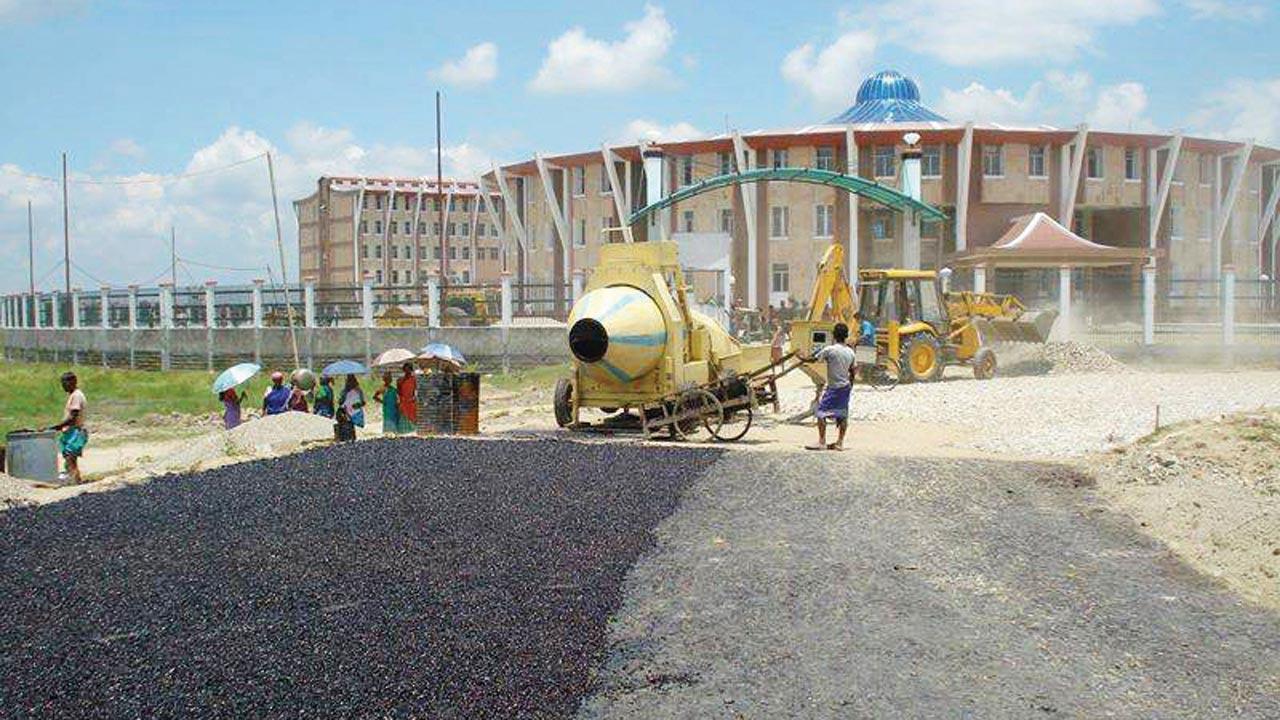
Markoline, the Navi Mumbai-based highway maintenance company, has completed 64,00,000 sqm of microsurfacing to date, including on Mumbai’s Palm Beach Road under Navi Mumbai Municipal Corporation
In 2009, when Sanjay Patil, chairman and managing director at Markolines, a Navi Mumbai-based highway maintenance company, pitched a project using the technique of microsurfacing, it was met with scepticism. A German technology of road repair, microsurfacing uses an eco-friendly laboratory-designed mixture of polymer modified emulsion, aggregates, mineral filler and other additives accurately proportioned, mixed and uniformly spread over a surface. “We wanted to use the type with 8 mm thickness, but the authorities were unsure because the prevailing material that was being employed was 40 mm. How could 8 mm possibly compete with 40 mm? Little did they know about the premium quality it was made of,” Patil recollects.
He explains that the mixture is applied in a semi-solid state, using specialised paving equipment. Upon application, the mixture changes chemically and sets so quickly that traffic can resume on the stretch within two hours. A low-cost solution in preventative road maintenance that also extends the lifespan of roads by five years, is now being used more widely than a decade ago. In fact, Patil’s firm has completed 64,00,000 sqm of microsurfacing to date, including on Mumbai’s Palm Beach Road under Navi Mumbai Municipal Corporation, the Mumbai Nashik Expressway, the Dhule Pimpalgaon Expressway and the Mahua Bharatpur Expressway. “It has gained more legitimacy, but it can go beyond highways. Urban and rural roads could also massively benefit from this technology.”
Trending Stories
Latest Photos
Latest Videos
Latest Web Stories
ADVERTISEMENT
Mid-Day Fast
ADVERTISEMENT

ADVERTISEMENT