Home / Sunday-mid-day / Article /
Why the Arabs practice modern-day slavery
Updated On: 21 November, 2021 09:27 AM IST | Mumbai | Jane Borges
A journalist’s new book looks into the plight of undocumented migrants living in the Gulf, and how they continue to be victims of bonded labour and human trafficking





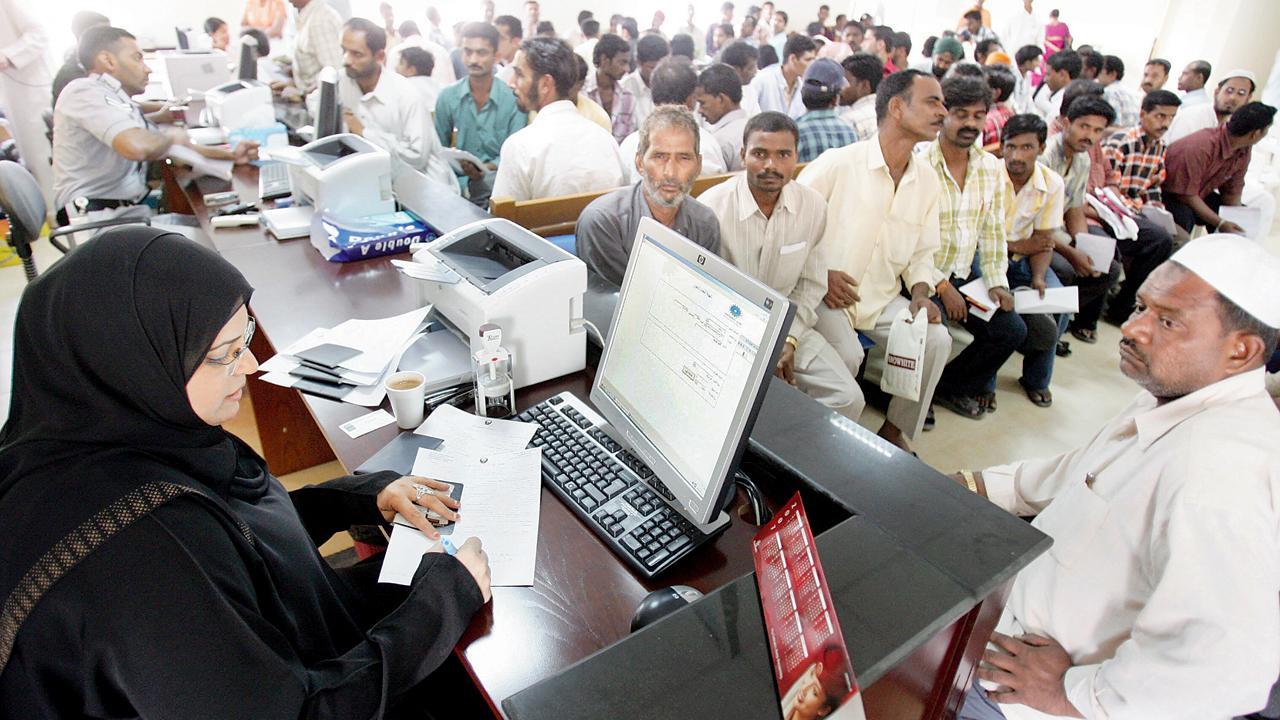
In this file picture, an Emirati employee is seen at the Dubai immigration office, checking the papers of an illegal Asian worker as others wait for their turn. Pic/Getty Images
Rejimon Kuttappan’s journalism is what countries, especially those where democracy is conspicuous by its absence, worry about. Among the handful of journalists in the Sultanate of Oman, who reported about the local protests during the Arab Spring in 2011, Kuttappan has been on the radar of authorities once too many. “I was summoned by the police four times, summoned in court thrice, kept in custody twice, and faced two cases, which ended in favour of me, between 2009 and 2017,” he shares in an email interview.
He was chief reporter for the Times of Oman, one of the oldest English dailies in the country, when he was finally deported back to India in 2017, for exposing human trafficking and modern slavery in the Arab Gulf through a front-page news story. “It was hard. Always threatening,” he says, of working in a country, where there’s little press freedom—the World Press Freedom Index from Reporters Without Borders (RSF) ranked Oman 135th out of 180 countries. “I had [to] hold back several migration stories, only because I couldn’t get a comment from the employer or other side even after sending repeated emails, placing several calls, and sending at least a dozen messages.”
Trending Stories
Latest Photos
Latest Videos
Latest Web Stories
ADVERTISEMENT

Ganeshotsav 2026

ADVERTISEMENT