Home / Sunday-mid-day / Article /
You’ve got a DM
Updated On: 25 July, 2021 09:26 AM IST | Mumbai | Cynera Rodricks
With most employees stuck in WFH situations, companies are scrubbing emails from their workplace tools, and exploring the informality of user-friendly papas Flock, Slack and Snapchat




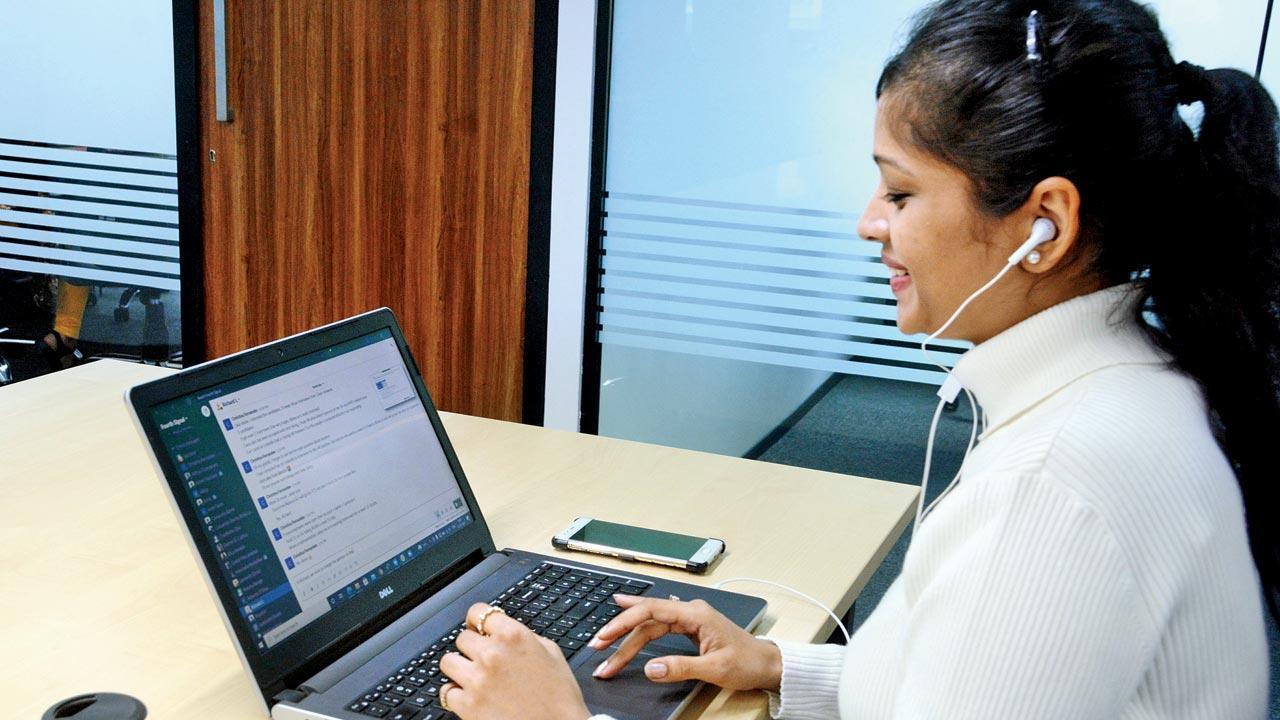
Employees at Fourth Signal use Slack for instant messaging on the corporate network. They feel that it helps them collaborate and work effectively as a team. Pic/Satej Shinde
Emails have been the bedrock of communication in the corporate sector. But, with digital tools evolving at a rapid pace in recent years, many feel that opening your inbox might soon be a thing of the past. With remote work becoming the new norm, most organisations are relying heavily on direct messaging more than ever before, which allows managers and bosses to ping anyone in an organisation with blinding immediacy. Numerous web tools like Slack, Microsoft Teams, Skype, and even personal communication platforms like WhatsApp and social-media platforms like Instagram, Facebook Messenger, and Snapchat are gradually replacing the email’s old function.
Shalini Sharma, senior manager, Human Resources at Flock, a team communication application and online collaboration platform, highlights how Flock is being used by several organisations globally. “Emails don’t let you communicate in real time. Flock makes communication within organisations across locations efficient with a simple chat interface, enhanced with emojis, GIFs, and polls. It has helped leads remain in touch with their own team and teams across the organisation,” she shares.
Flock sorts out basic work needs like setting reminders, creating to-do lists, sharing notes and the most favourite of all, the Praise app, where employees can appreciate each other for small tasks, which otherwise go unseen. The application also houses other apps, such as Zoom, GitHub, Jira, Google Drive, Google Calendar, Trello, and Twitter. These apps can be easily integrated into a channel, so that you don’t waste time switching between multiple tools.
Trending Stories
Latest Photos
Latest Videos
Latest Web Stories
ADVERTISEMENT

Ganeshotsav 2026
ADVERTISEMENT