Home / Sunday-mid-day / Article /
Your everything guide to Nowruz
Updated On: 15 March, 2020 07:50 AM IST | Mumbai | Tinaz Nooshian
An ancient celebration attached to the Northern Hemisphere's vernal equinox plays out in Mumbai each year by the Parsi and Iranian Zoroastrian community. Before you sign up for that hoax Navroze lunch spread at a suburban resto-bar, read this





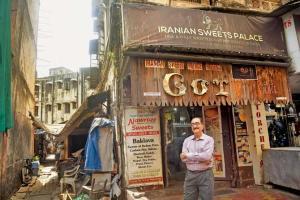
Hassan Hajati has kept the tradition of Nowruz sweets alive in a city where the Iranian population is fast dwindling. Pics/Atul Kamble
My brother and I are more Parsi than Iranian, despite mixed but equal genes. But for one day every year, we'd switch gears, renewing our ties with the country our father left as a teenager to make a life in Mumbai. Our mother, a Parsi, was debilitated by language although high on enthusiasm. She gave up, I estimate, on Persian when she confused cherries ("gilas" in Farsi) with the English "glass", ending any hope of earning brownie points from her mother-in-law. She'd stand awkwardly but amiably as my father greeted guests around the sofreh, spraying them with rose water, and showing them their reflection in a table mirror—a way to reflect on the year gone by. A bite of baklava or a mouthful of walnut and ghesei (apricot) were followed by the double hug.
Nowruz ("new day") was centred at home around the sofreh, a table with an elaborate spread. It was a sort of thanksgiving punctum, stacked with everything that nature offers you, because the festival celebrates the onset of spring and the agricultural season after a long, trying winter. Although every home customises the "table" (ours veers towards dry fruit, wine, sweets and flowers), the spread must include seven items beginning with the Farsi letter for seen: Sabzeh (wheat or barley sprouts); sir (garlic); sib (apples); sumac (berries); serkeh (vinegar) samanu (wheat germ pudding) and senjed (dried fruit from lotus tree).
Trending Stories
Latest Photos
Latest Videos
Latest Web Stories
ADVERTISEMENT
Mid-Day Fast
ADVERTISEMENT