






From Co-living to Flexible Living: Reimagining the communal housing mode
Updated On: 27 January, 2021 12:00 AM IST | Mumbai | Partnered Content
Meticulous design and planning strategies can allow for even more flexibility: a bed that turns into a couch, a kitchen counter that doubles up as a work desk, orsliding partitions that convert a living room during the day to a bedroom at night

Listen to this article :
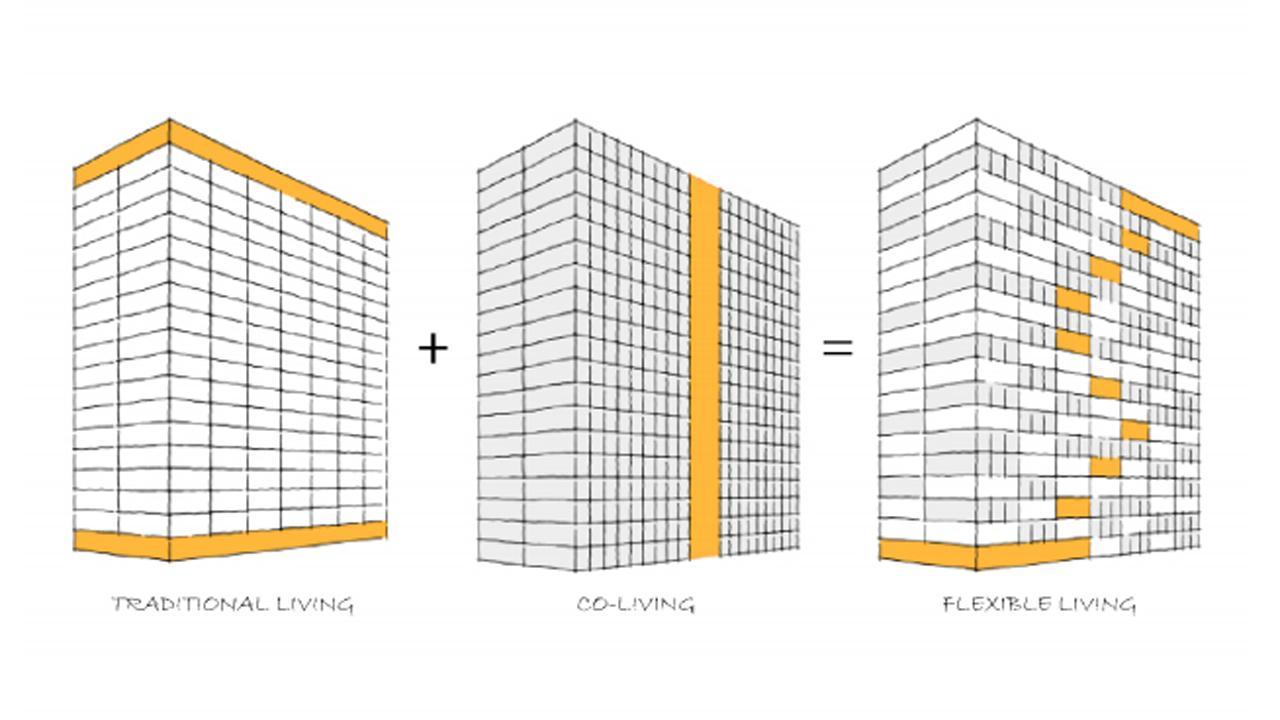
Co-living caters to a niche within the demographic
Co-living is a fairly recent housing model that has gained traction in response to the problem of rising population and exorbitant housing prices, especially in larger cities such as Mumbai. As an improvement to the paying guest model, it offers small private rental units with a bedroom and sometimes a bathroom. Extracting communal spaces out of the apartments and combining them into large, shared amenities allows for reduced rents. These apartments typically come furnished and semi-serviced; besides the tenants can enjoy multiple amenities, co-working spaces, and an experiential social lifestyle. Developers benefit too, as they are able to lease more units as compared to the traditional rental models.
Co-living, however, caters to a niche within the demographic. The tenants usually consist of young professionals or newcomers looking for independence, affordability, short-term leasing, or social engagement opportunities. They typically move out as they progress in their professional careers or personal lives. A transient population, due to its inherent unpredictability, requires rigorous management and offers inconsistent profitability. So, what then is a more viable strategy that adapts to the changing needs, discourages residential segregation, provides short and long-term opportunities, and maintains steady profitability?
Read Next Story
Trending Stories
Latest Photos
Latest Videos
Latest Web Stories
ADVERTISEMENT
Mid-Day Fast
ADVERTISEMENT

ADVERTISEMENT