With electric double deckers set to hit Mumbai, BEST fans share hopes and fears
Updated On: 14 February, 2023 09:30 AM IST | Mumbai | Nascimento Pinto
In January, the Maharashtra government said the BEST would get 900 electric and AC double deckers, to provide a cleaner alternative to existing buses and reverse the decline in commuters. Bus lovers in the city say it's a start but have a longer wish list – including dedicated bus lanes, cleaner options, and a nod to Mumbai's old double deckers



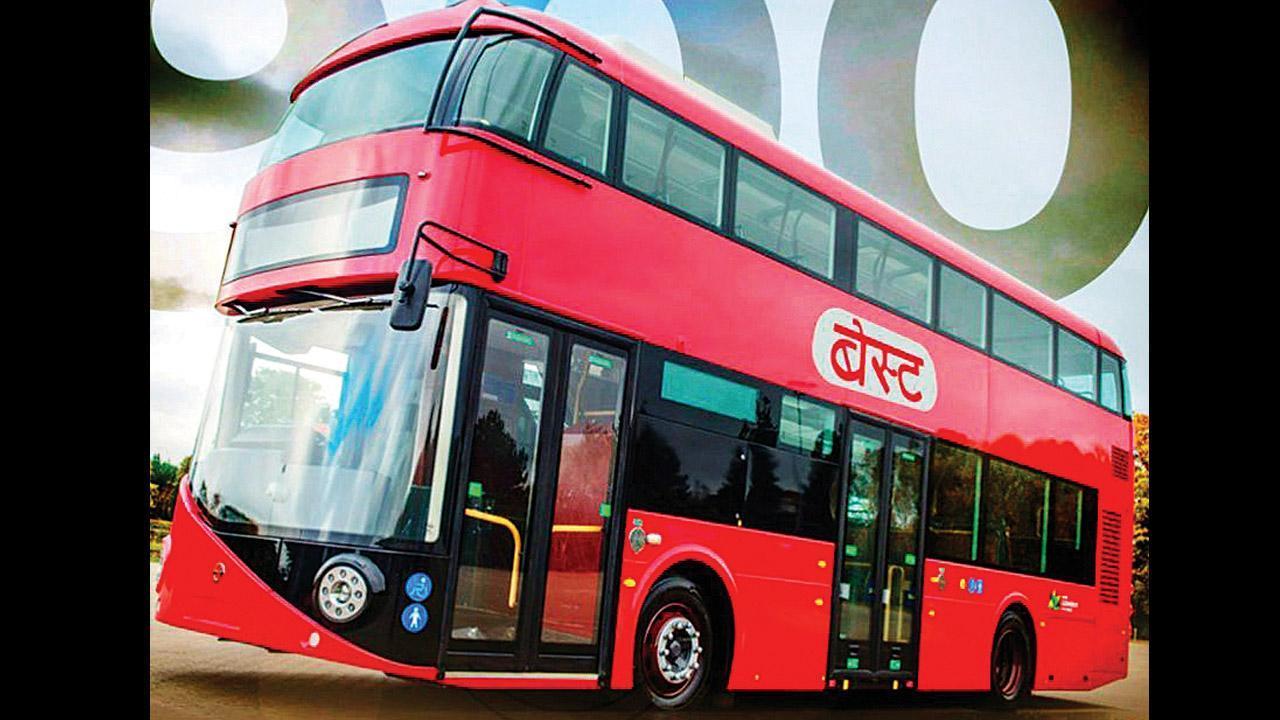
Image for representational purpose only. File pic
“The real problem in Mumbai is the road and space shortage and it can be managed efficiently by using double decker buses,” says Ashok Datar, a city-based transport analyst, who believes buses and autorickshaws in combination can help solve Mumbai’s commuting woes. Travelling in Mumbai has been a perennial challenge, despite the life-saving local trains, especially because of growing traffic snarls. Rather than cars which only crowd up the road, buses seem to be the ideal solution– not just because they are cheaper but also because they carry more people, reducing the negative impact on the environment.
Public transport in Mumbai received encouraging news in late January, when the Maharashtra Minister of Tourism and Environment, Aaditya Thackeray, announced that Brihanmumbai Electricity Supply and Transport (BEST) is procuring 900 AC electric double-decker buses to run in the city. This marks the revival of the double decker format, albeit in a new eco-friendly avatar. The BEST had first introduced double decker buses in 1937, 11 years after it introduced the single decker bus. The iconic buses enjoyed peak popularity in the 1980s and 1990s but have since seen a decline, and the last of them were slated to be phased out by October 2023. As its number of commuters fell over the years, the organisation had struggled to run double deckers because they require two conductors whereas single deckers can do with one.
Buy now to read the full story.
For any queries please contact us: E-mail: support@mid-day.com
Trending Stories
Latest Photos
Latest Videos
Latest Web Stories
ADVERTISEMENT
Mid-Day Fast
ADVERTISEMENT

ADVERTISEMENT