






Home / Mumbai-guide / Mumbai Food / Article /
Decoding the authenticity of rasam debate along with a quick recipe and guide
Updated On: 01 August, 2022 10:16 AM IST | Mumbai | Phorum Pandya
A recent debate around what constitutes as authentic rasam has given us enough reason to break down the discussion as well as share a recipe and a curated guide

Listen to this article :
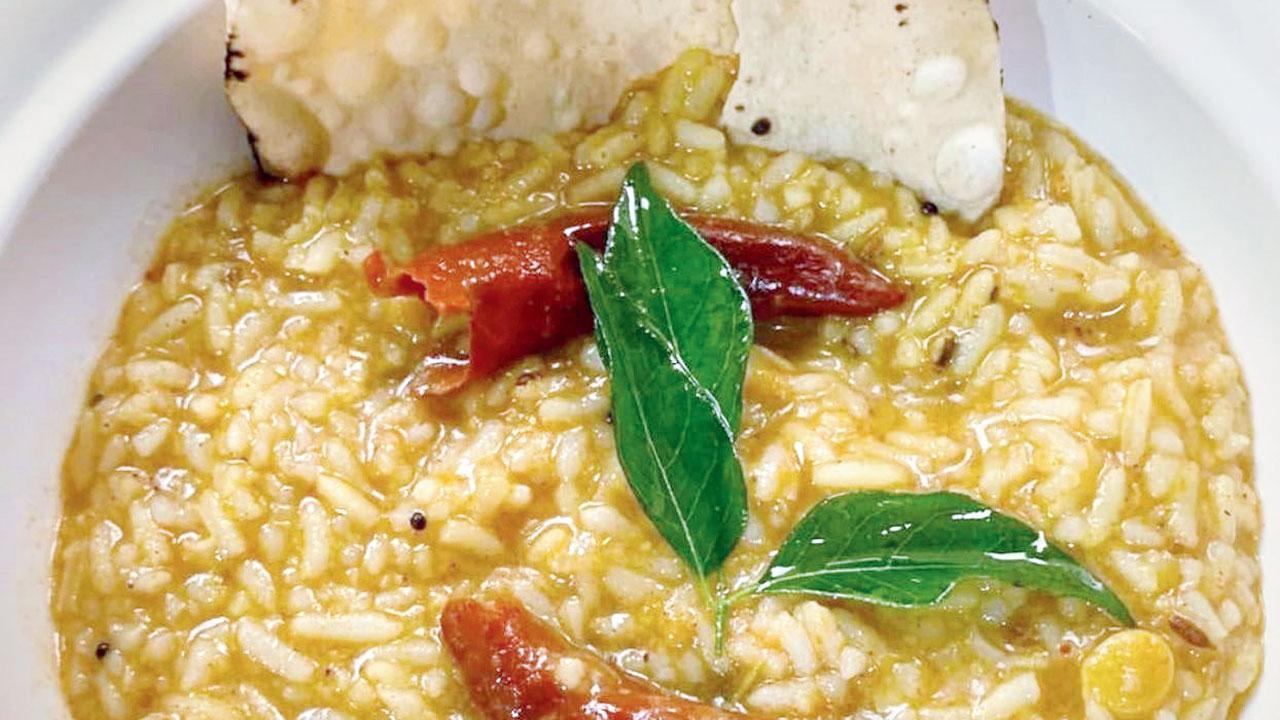
Rasam rice by chef Marina Balakrishnan
On a drippy monsoon morning, Saee Koranne-Khandekar was craving for a hot serving of rasam. The author and culinary consultant posted a rasam recipe reel on her Instagram. The recipe used broth made from chicken bones as the base of the rasam. Little did she expect that she’d receive comments dissing the use of meat in her rasam. “I got messages such as “I can’t even look at this” and “You have ruined rasam” because people have a stereotypical notion that a rasam is vegetarian/Brahminical food. The use of chicken bones in it somehow offended this perception. The interesting thing is that meat-based rasams are absolutely commonplace,” Khandekar says.
Her thread included many followers sharing versions of crab, prawn, and mutton rasams that are considered delicacies. “All traditional meat eating communities are mindful about the manner in which they consume the animal, making sure to use all parts of it in respect. Using bones, therefore, is common. It also has healing properties,” she adds, pointing to the problem that commercial eateries have typically only presented vegetarian versions of rasam. “And as consumers, we have not bothered to open our minds and study the traditional foods of the country, and so it is easy to stereotype and get offended when something outside of that stereotype is presented. Vegetarianism is being glorified, most often for the wrong reasons, and so, meat eating communities and foods are facing this kind of baseless debate for fare that has, for centuries, been traditionally eaten,” she says.
Trending Stories
Latest Photos
Latest Videos
Latest Web Stories
ADVERTISEMENT
Mid-Day Fast
ADVERTISEMENT

ADVERTISEMENT