






Home / News / India News / Article /
Radha in space and time
Updated On: 09 December, 2018 05:54 AM IST | Mumbai | Devdutt Pattanaik
All Dharmashatras say, all traditions (riti) and laws (niti) must be subject to change depending on geography (desh), history (kala) and capability of communities (guna) involved. This idea is reiterated in the Manusmriti

Listen to this article :
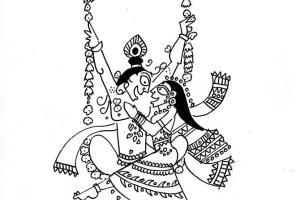
Illustration/Devdutt Pattanaik
 Whenever there is an issue with Islam, people will refer to the original source: the Quran, or sometimes the Hadith. Whenever there is a problem in Hinduism, people are confused as to which source they would have to refer to. All Dharmashatras say, all traditions (riti) and laws (niti) must be subject to change depending on geography (desh), history (kala) and capability of communities (guna) involved. This idea is reiterated in the Manusmriti.
Now, the simplest way of understanding this is to observe how Radha appears in the Hindu landscape over space, time and communities. In Rajasthan's Nathdwara Temple, where Krishna is worshiped as Shreenathji, there is no Radha image placed. Nor do you find Radha's image in Jagannath Puri temple, Maharashtra's Pandharpur Temple, Kerala 's Guruvayur Temple or in Udupi's Krishna temple. Yet, Radha dominates Krishna worship in the Gangetic plains.
Read Next Story
Trending Stories
Latest Photos
Latest Videos
Latest Web Stories
ADVERTISEMENT
Mid-Day Fast
ADVERTISEMENT

ADVERTISEMENT