






Flying mountains do not lie
Updated On: 29 May, 2022 07:19 AM IST | Mumbai | Devdutt Pattanaik
There are at least five stories that explain how mountains in the south came from the Himalayas, the father of all mountains

Listen to this article :
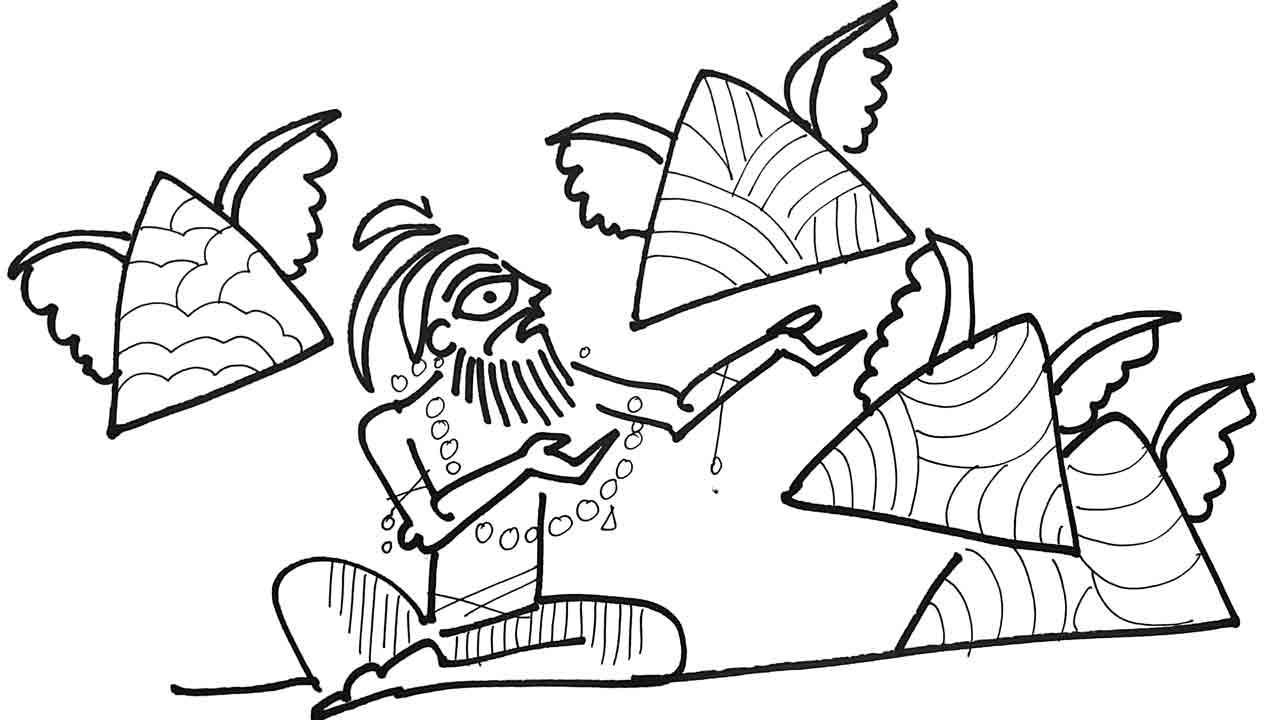
Illustration/Devdutt Pattanaik
 Nationalists want to believe that Hinduism existed homogeneously across the Indian subcontinent (Akhand Bharat) since time immemorial. However, everyone who studies history knows this is not true. Harappan civilisation thrived 4,000 years ago only in Northwest India. Vedic civilisation emerged 3,000 years ago only in Gangetic plains after the arrival of waves of Aryan men from Eurasia via Central Asia who married local women. Buddhism and Jainism challenged Vedic ritualism 2,500 years ago, primarily in the eastern Gangetic plains beyond river Gomti. Only about 2,000 years ago we have firm evidence of Aryan/Vedic culture moving south, beyond Deccan regions to Odisha, Andhra, Tamil Nadu, Konkan, Maharashtra, Karnataka and finally Kerala. Folklore captures this movement. There are at least five stories that explain how mountains in the south came from the Himalayas, the father of all mountains.
We are told that in ancient times, mountains and elephants had wings. They travelled around the world, troubling the sages. They would sit on branches of trees and cause havoc. So, Indra took his thunderbolt and destroyed all their wings, forcing the mountains to land on the ground. Clouds who once travelled with flying mountains come each year to meet their old friends who cannot move. This results in rain.
Read Next Story
Trending Stories
Latest Photos
Latest Videos
Latest Web Stories
ADVERTISEMENT
Mid-Day Fast
ADVERTISEMENT

ADVERTISEMENT