Rise of Hindu Monotheism
Updated On: 14 April, 2024 05:44 AM IST | Mumbai | Devdutt Pattanaik
And Hari, who was Vishnu, the shape-shifting householder, identified as bhagavan, the leader who apportions fairly to all in the group (sam-rajya)





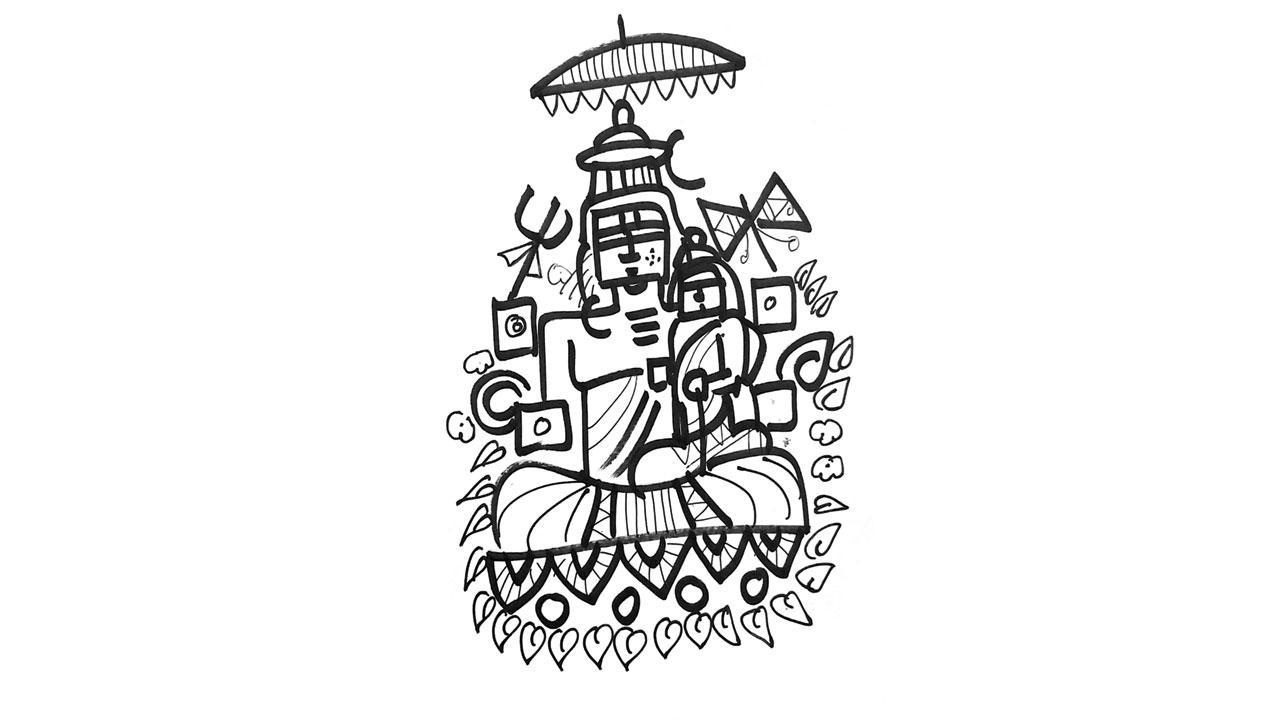
Illustration/Devdutt Pattanaik
 Vedic prose and poetry is polytheistic. It refers to many gods, spelt without capitalization. Vedic philosophy starts considering the idea of one god. It seems monotheistic. But that is not quite true. Is this one god without (brahman) or within (atma) us? Is it infinite or finite, within the body (dehi) and in everything (ananta)? With form (saguna) or without form (nirguna)? Is it only the spiritual (purusha) or does it also include the material (purusha)?
Stories give two rather authoritative but complementary forms to this God, both male. Hara, who was Shiva, the still hermit, identified as ishwara, the sovereign master who establishes autonomy (sva-rajya). And Hari, who was Vishnu, the shape-shifting householder, identified as bhagavan, the leader who apportions fairly to all in the group (sam-rajya).
Trending Stories
Latest Photos
Latest Videos
Latest Web Stories
ADVERTISEMENT

Ganeshotsav 2026

ADVERTISEMENT