






Rivalry of Sants and Naths
Updated On: 10 October, 2021 06:48 AM IST | Mumbai | Devdutt Pattanaik
Nath-jogis became particularly famous from the 10th century onwards, as indicated by tales of Matsyendranatha and Gorakhnath, the founders of this order

Listen to this article :
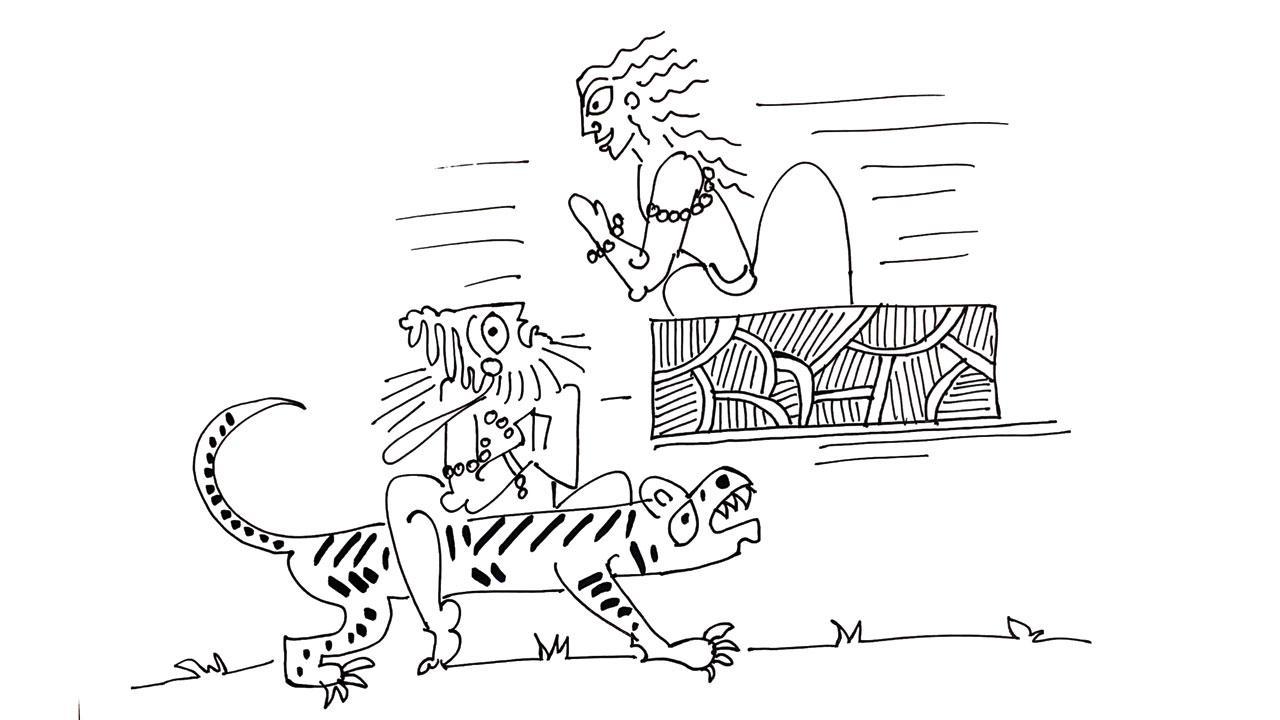
Illustration/Devdutt Pattanaik
 In 13th century Maharashtra, Dyaneshwar translated the Bhagavad Gita into the local language. It was a great cultural revolution. He encouraged people to use emotions and feelings to connect with the divine. This was the Bhakti Marg or path of devotion. Here, Dyaneshwar or Gyan-dev is addressed as Sant.
In legends, Dyaneshwar was challenged by one Changa Nath, a Tantrik yogi. Changa Nath came to the village riding a tiger, to intimidate the young poet-saint. Dyaneshwar caused the wall in the village he was sitting on to move through the air. When Changa Nath saw Dyaneshwar and his siblings travelling through the sky on a wall, he was awestruck and humbled. This story of confrontation between a Tantric Nath-Jogi and a Bhakti Margi Sant is a recurring theme in India’s religious literature.
Read Next Story
Trending Stories
Latest Photos
Latest Videos
Latest Web Stories
ADVERTISEMENT
Mid-Day Fast
ADVERTISEMENT

ADVERTISEMENT