‘The sense of being edged out is sad’
Updated On: 16 July, 2023 06:40 AM IST | Mumbai | Meher Marfatia
Shabnam Minwalla’s book, Zen, threads family and contemporary narratives in an epochal history of the city and the country





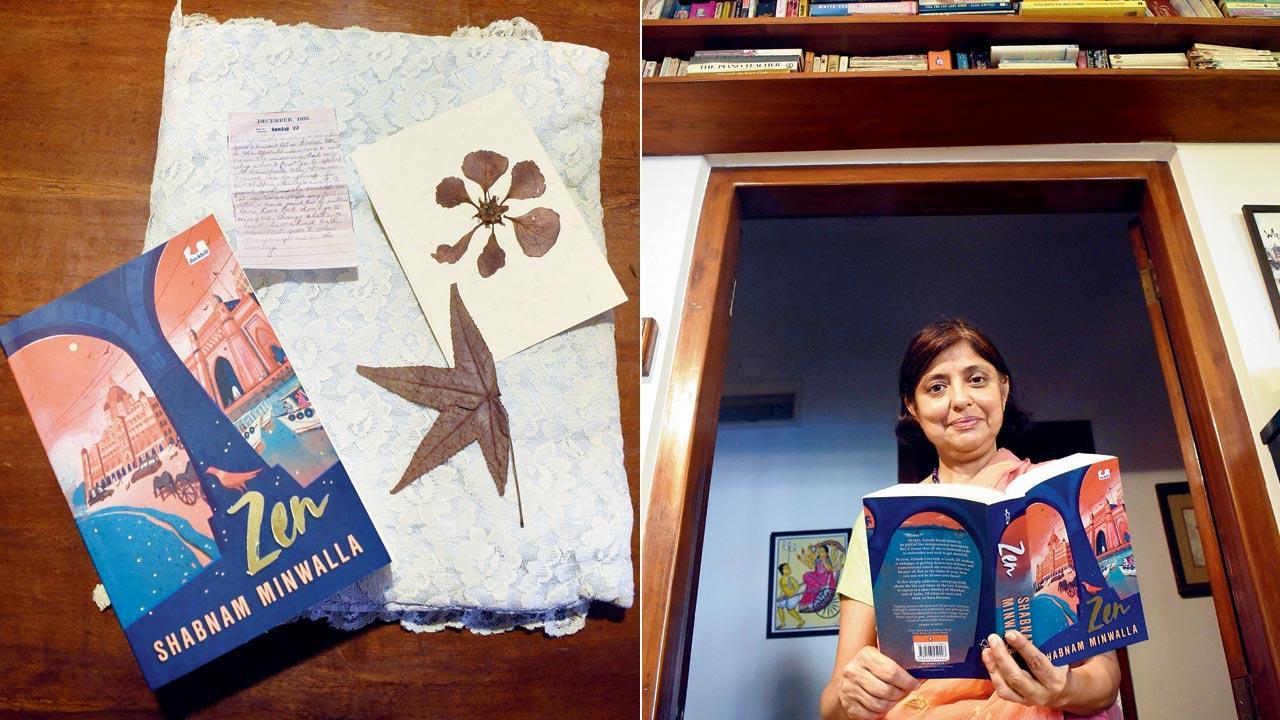
Page from the diary of the author’s grandmother’s sister, inspiring the character of Zainab Essaji (right) Shabnam Minwalla at her home in Colaba. Pics/Sameer Markande
 Few writers vault effectively from children’s fiction to a complex saga spanning two pivotal socio-political eras. Swinging between pivotal periods of Indian and global history—the crisp present unravels as Zainab Currimji’s perspective, the past through Zainab Essaji’s personal diary jottings from the 1930s—Shabnam Minwalla’s Zen (Duckbill Books, Penguin) does so deftly and with depth.
The title of the assuredly paced novel running in dual timelines is the shortened name of the second of her pair of spirited heroines called Zainab. The first Zainab, raised in a conservative Muslim family, is inspired by Minwalla’s grandmother’s sister, Zuleika, who bequeathed one of her grandchildren her diary.
Trending Stories
Latest Photos
Latest Videos
Latest Web Stories
ADVERTISEMENT
Mid-Day Fast
ADVERTISEMENT