When nomads come to town
Updated On: 21 July, 2024 07:15 AM IST | Mumbai | Shweta Shiware
An ongoing exhibition in Leh charts the woven woollen textile heritage of the nomadic pastoralist community of the Changthang plateau, while a women’s cooperative integrates contemporary designs with traditional crafts. Together, they highlight Ladakh’s enduring textile legacy, bridging the past and present





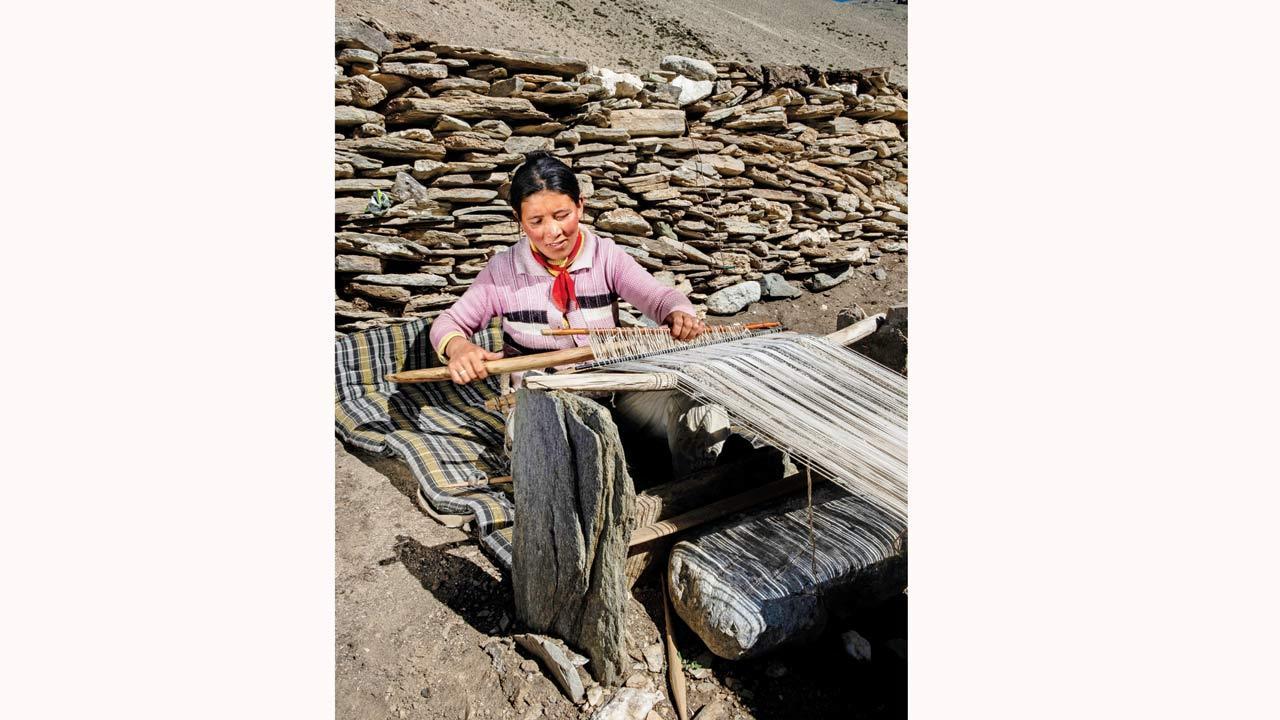
A Changpa weaver from Kharnak uses the traditional backstrap loom. In Ladakh, loom is known as thags-cha, and the weaver as thags-mkhan. Among Changthang nomads, men weave on a fixed-heddle loom (sa-’thags), while women on a backstrap loom (sked-’thags). Ladakhi belief holds that weaving and loom are inspired by the mythical loom of Duguma, wife of King Gesar. Legend says Duguma continues to weave, completing one row a year. When she finishes her fabric, it is said the world will end
 In an era defined by rapid product turnover favouring newer or cheaper alternatives, the significance of sheep wool—cultivated for over 8,000 years—remains remarkable. This resilience is a central theme in Threads That Talk: Woven Narratives from Changthang.
On view in Leh until August 6, the exhibition hosted by Ladakh Arts and Media Organisation explores the interplay of warp and weft in woven woollen textiles, intertwining male and female narratives. Remove either, and you are left with nothing.
Trending Stories
Latest Photos
Latest Videos
Latest Web Stories
ADVERTISEMENT

Ganeshotsav 2026

ADVERTISEMENT