Home / Sunday-mid-day / Article /
Could Bhagat Singh have been saved?
Updated On: 14 August, 2022 09:11 AM IST | Mumbai | Aastha Atray Banan
Author Satvinder Juss’s passion lies in telling the tale of India’s beloved hero, and reminding us of his patriotism at a time when we may need it most





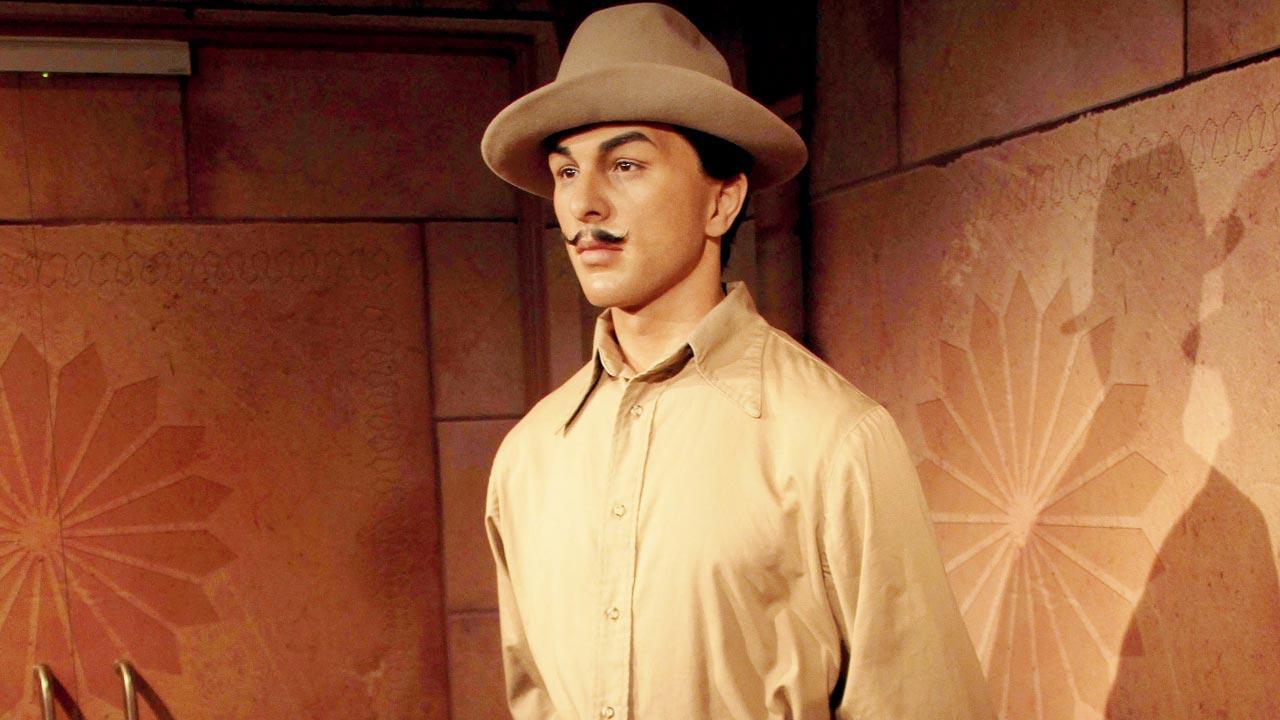
A wax figure of Bhagat Singh displayed at Madame Tussauds Wax Museum at Connaught Place, on October 24, 2017 in New Delhi. Pic/Getty Images
Indians love Bhagat Singh, and such generalisation would be true for very few individuals. But the young revolutionary, who was hanged in 1931 at the age of 23
for a mistaken-identity murder, has been seen as a national hero and a romantic figure by millions of Indians for years. Movies such as Rang de Basanti cast him into the limelight as a pure-hearted, well-intentioned good man. But who was he really, and why couldn’t he have been saved?
Satvinder Juss, the author of Bhagat Singh: A Life in Revolution (Penguin Random House), is a man intent on telling the story of the charismatic freedom fighter. A professor of Law at King’s College in London, UK, Juss also wrote The Execution of Bhagat Singh: Legal Heresies of the Raj in 2020. For Juss, Singh’s charm comes from the fact that he transcended religious and political agendas. “He is loved because he represented the best of what India could be. As identity politics resurfaces everywhere in the world, Singh becomes even more important as he is beyond all that,” says Juss. “He was adored by all types of people, the dispossessed or those reaching out for a noble idea of what India should be. A decade ago, a poll was conducted by a publication about the greatest Indian ever, and India voted for Bhagat Singh, with [Netaji] Subhash Chandra Bose coming in second. “
Trending Stories
Latest Photos
Latest Videos
Latest Web Stories
ADVERTISEMENT
Mid-Day Fast
ADVERTISEMENT