Home / Sunday-mid-day / Article /
‘I was living a fake life locked at home’
Updated On: 19 September, 2021 08:58 AM IST | Mumbai | Jane Borges | Somita Pal
Cut off from their usual safe spaces during the Covid-19 lockdowns, LGBTQiA+ members, who were forced to live with family, found themselves struggling with preserving their mental health





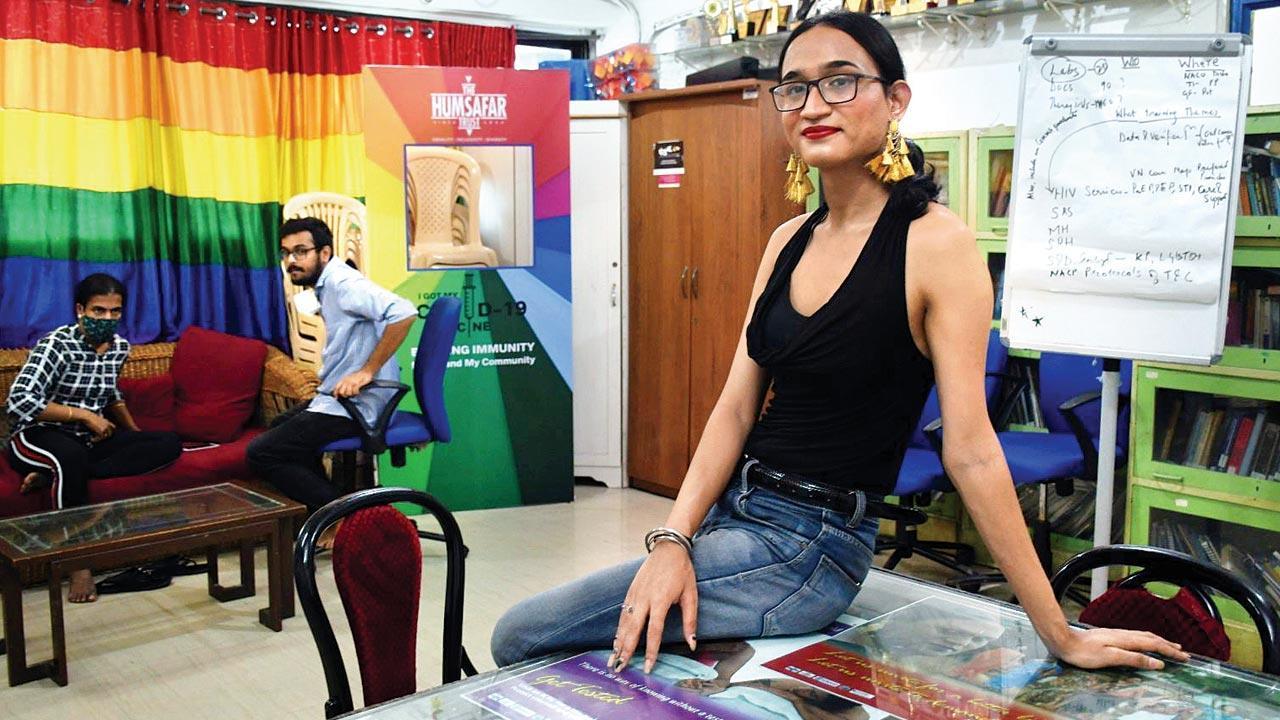
Transwoman Anjali Siroya, who works as recruitment coordinator at TRANScend, The Humsafar Trust, says because she was home-bound during the lockdown, she had stopped dressing up. Pic/Ashish Raje
Anjali Siroya’s work space is also her “safe space”. The 23-year-old, who is recruitment coordinator at TRANScend, an initiative of The Humsafar Trust to enhance socio-economic inclusion of transgender people in India, came out to her family as a transwoman, six years ago. While her parents didn’t turn hostile towards her, they continued to call Anjali by her birth name, addressing her by the pronoun she no longer identifies with. Her job, however, was a healthy distraction, enabling her to engage with members of the community for a better part of the day. Home only became the place she returned to each night.
This changed during the pandemic-induced lockdown last year. From March 2020 till December of that year, Anjali was home-bound. The workshops and events she’d have been involved with, moved online. With no friends or community members to turn back to, Anjali was left to fend for herself. “Because I didn’t go to office, I had stopped wearing make-up and dressing up. This went on for over six months. I realised during that period that I couldn’t be myself anymore. I experienced several depressive episodes,” shares Anjali in a telephonic chat. When she returned to work in January this year, Anjali was hopeful that the situation would improve. “But, in March, we went back into lockdown, and things were back to square one.”
Trending Stories
Latest Photos
Latest Videos
Latest Web Stories
ADVERTISEMENT

Ganeshotsav 2026

ADVERTISEMENT