







Home / Sunday-mid-day / / Article /
Do you know about the Bombay Blood Group?
Updated On: 26 February, 2023 07:56 AM IST | Mumbai | Yusra Husain
They know there aren’t too many of them, but aren’t sure exactly how many. And each one must be saved. Indians living with the rare Bombay Blood Group must network, volunteer and educate if they are to watch out for kindred souls in a country where a national rare blood registry is still under-production and ID proofs don’t list blood types

Listen to this article :
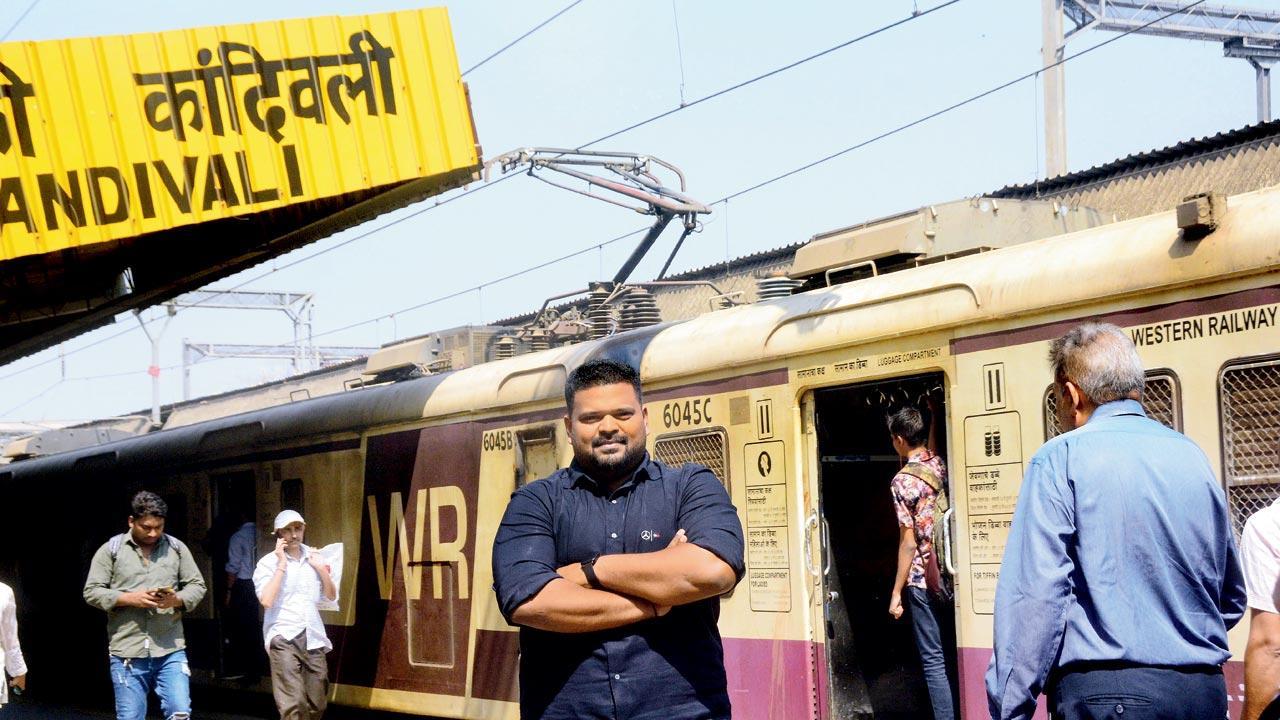
Media professional Deepakkumar Eshwaran, 36, learnt at age 26 that he was not O positive but had the rarest of rare blood type Para-Bombay. A country of a billion has just 30 registered donors of this blood group. Pic/Satej Shinde
Mahesh Krishna Ghag has hit a century. The man who works as labour contractor at SEEPZ Andheri has donated blood one hundred times. Now 52, Ghag first became a donor when he was 19 and his grandmother needed blood after a surgery following a leg fracture. The day after, a call from the hospital informed him that he was one of a kind. The perplexed teen learnt that his blood group was one of the rarest around, and named after the city he lived in.
One in 10,000 Indians have the Bombay Blood Group (BBG) also called the HH blood type or the ABO blood group, making Ghag part of a tiny but close knit community. Members of this coterie cannot donate blood at will like the rest of us. This means that transfusion is a challenge. Ghag tells mid-day that he moves on a donation request only when he receives a call from KEM Hospital or one of the non-profits he is connected to. Ghag is part of a miniscule group of 450 registered donors in India, says Vinay Shetty, vice-president of Think Foundation, the Mumbai-based non-profit. The lack of a national survey means that we are unaware about the total number of Indians who live with this blood type. What we do know is that the frequency is highest in India, and Mumbai makes up for a chunk; the type is rare in the Caucasian population. The probability of finding a person with Bombay phenotype is one for every 2,50,000 people worldwide. India has the highest number with one Bombay blood type per 7,600 people. Consanguineous marriages or inter-familial unions between individuals related by blood are identified as one of the reasons for the prevalence of this blood type.
Trending Stories
Latest Photos
Latest Videos
Latest Web Stories
ADVERTISEMENT
Mid-Day Fast
ADVERTISEMENT

ADVERTISEMENT