Home / Sunday-mid-day / Article /
Never forget
Updated On: 22 May, 2022 08:30 AM IST | Mumbai | Jane Borges
Prolonged grief that stems from the loss of a loved one has now been included as a disorder in the bible of psychiatry, but will it come in the way of mourning or make it acceptable to seek help?





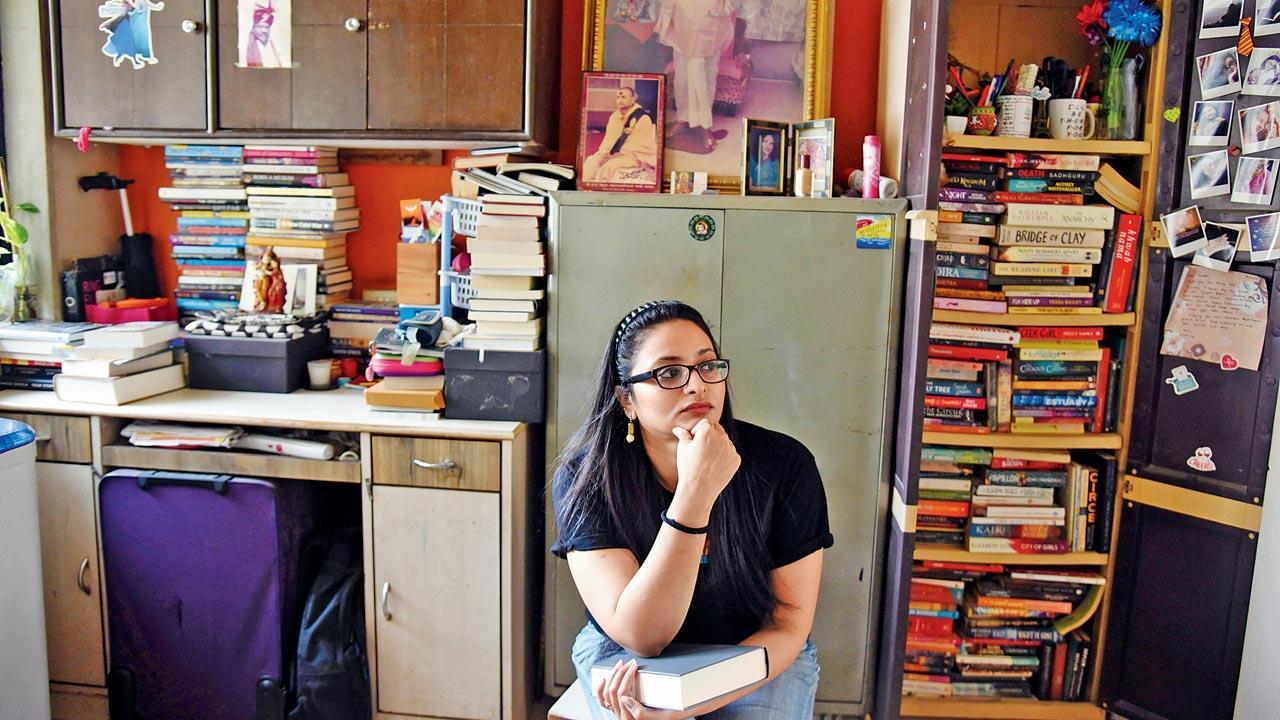
Books blogger Siddhi Palande says she was unable to cope with the untimely death of her father six years ago, due to which she wasn’t able to look after her newborn. “I wasn’t the mother I should I have been to her. I regret this—all I can remember was slipping in and out of this black hole.” Pic/Sameer Markande
I felt like I was inside a dark tunnel, which kept sucking me in, and there was no light at the end of it. Even if there was one, I couldn’t see it then,” says Kandivli-based books blogger Siddhi Palande, while talking about a bleak moment in her life, from six years ago, right after she lost her father, who was all of 55. His passing away, she says, was unexpected. It was her birthday, and she’d just become a mother. “My daughter was six days old, when I lost him. There had been nothing seriously wrong, except that he was anemic,” she shares. Her dad, a politician, was a voracious reader like her. “We were extremely close. He influenced my reading habits, and would recommend books to me. I remember when I wanted to read something, I’d go and sit next to his chair. There were so many questions I’d have for him.” The loss was aggravated because she wasn’t allowed to see him at the hospital, as she was a new mum. “It hit me hard. My body stopped functioning and I wasn’t producing any milk [for my newborn]. I remember that day [of his passing] clearly: my daughter was wailing nonstop, and there was nothing I could do. Someone had to feed her boiled milk.” The next two years were a blur. “A part of me had died, and I didn’t think I would survive this at all. People around me thought I was going crazy, and that I needed to be checked into an asylum. Nobody could understand what I was going through. Somehow books came to my rescue, and helped with the healing.”
It was only two years ago, four years after her father’s death that Palande sought help from a psychiatrist. “I was still grappling with insomnia, and suffering from anger bouts.” Palande was diagnosed with post traumatic stress disorder (PTSD). “That’s when the treatment began.”
Trending Stories
Latest Photos
Latest Videos
Latest Web Stories
ADVERTISEMENT

Ganeshotsav 2026

ADVERTISEMENT