Home / Sunday-mid-day / Article /
The difference of an ‘O’
Updated On: 10 April, 2022 08:33 AM IST | Mumbai | Jane Borges
Writer Anuradha Kumar turns armchair detective for her new book, where she investigates the story of two Indian men with the same name, who lived in 20th century America and whose paths crossed on more occasion than one





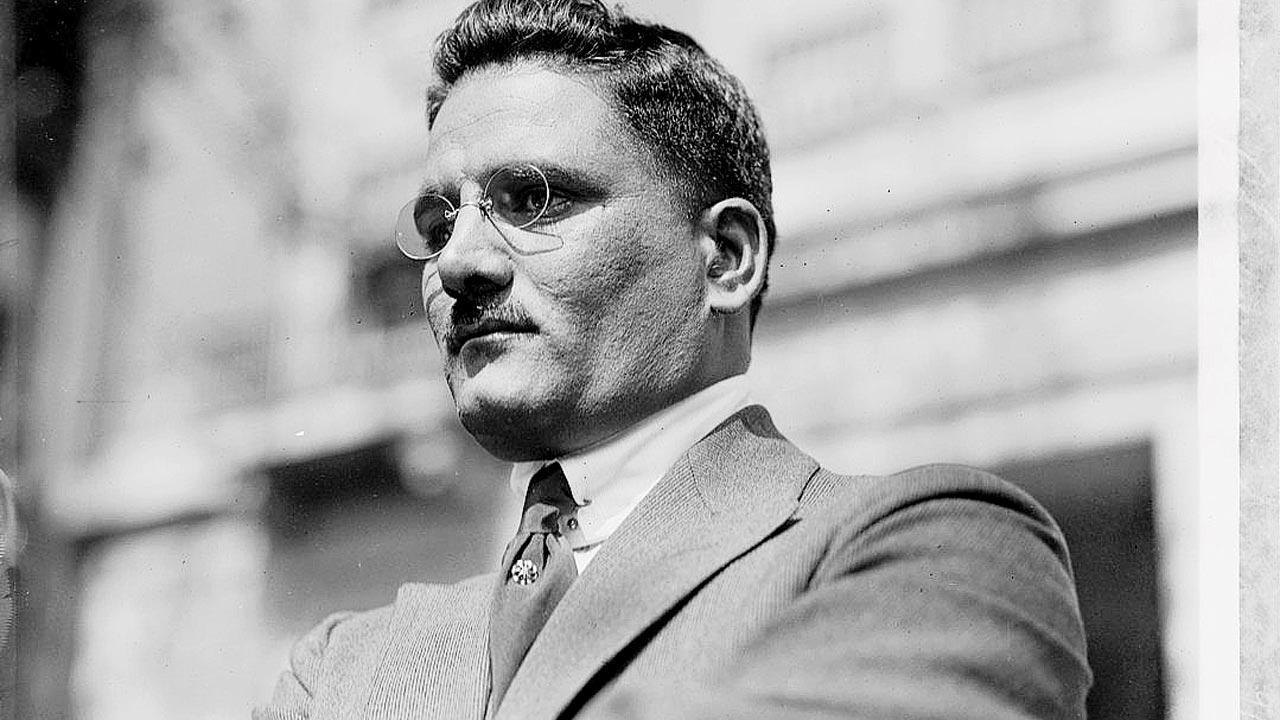
Bhagwan Singh was one of the most prominent forces of the Ghadar Party in California, before he took on a new avatar, remodelling himself as Bhagwan Singh Gyanee, a spiritual guru. Pic courtesy/en.wikipedia.org
Bhagwan Singh and Bhogwan Singh. These two men with names, distinguished only by the letter “O”, stirred the curiosity of New Jersey-based author Anuradha Kumar around six years ago. Her interest in their lives began when journalist Nandini Ramnath encouraged her to work on the early South Asians in Hollywood for a news site. While researching on the usual suspects—actors Sabu Dastagir and Lal Chand Mehra to name a few—she came across the “turban wrappers” of Hollywood. “To my mind, this was a fascinating occupation,” she shares over a video call. Two things were happening simultaneously in early 20th century America: the country was entering a powerful imperialist phase, while also gaining a stronghold in the movie business drawing British filmmakers by a dozen. It’s possibly why the orient began to captivate the imagination of American cinema. “They often needed turban wrappers to do the job [to wrap and unwrap the piece of clothing from their actor’s head]. The turban wrappers, on their part, sold their occupation very smartly. They claimed that every caste and ethnic group in Asia, more specifically India, wore their turbans differently, and mixing one for the other, could cause riots in the orient,” says Kumar. At least that was the argument that Bhogwan Singh made, when he was given the job. He went to become Hollywood’s foremost turban wrapper.
Around the same time, Kumar had been reading about the Ghadar Party revolutionaries, who had spread along the west coast in the US. At the forefront was one Bhagwan Singh, who had been deported from Vancouver in 1913. He became one of the most prominent forces of the Ghadar Party in California. “I imagined what it would be like for a rebel, who is being chased by authorities, to live in America.” Bhagwan had the ability to disguise himself and assume different identities. During the World War I years, he had travelled under different names across the US and East Asia—he had adopted over 17 different aliases. When he was apprehended at Jolo, off the islands of the Philippines in 1915, the police found a load of false moustaches and wigs on him. “If he could disguise himself to evade authorities, why couldn’t he be a turban wrapper in Hollywood?” Kumar remembers asking herself. This hypothesis of whether the misspelling was simply an alternative name for the same person seemed to occupy her thoughts enough to chase the life story of these two men, and in the process that of others.
Trending Stories
Latest Photos
Latest Videos
Latest Web Stories
ADVERTISEMENT
Mid-Day Fast
ADVERTISEMENT