Home / Sunday-mid-day / Article /
The inseparable Khans
Updated On: 18 July, 2021 09:38 AM IST | Mumbai | Jane Borges
Author Kaveri Bamzai’s new book explores the political, economic and social circumstances in which three talented young men, with a shared surname, rose to startling fame





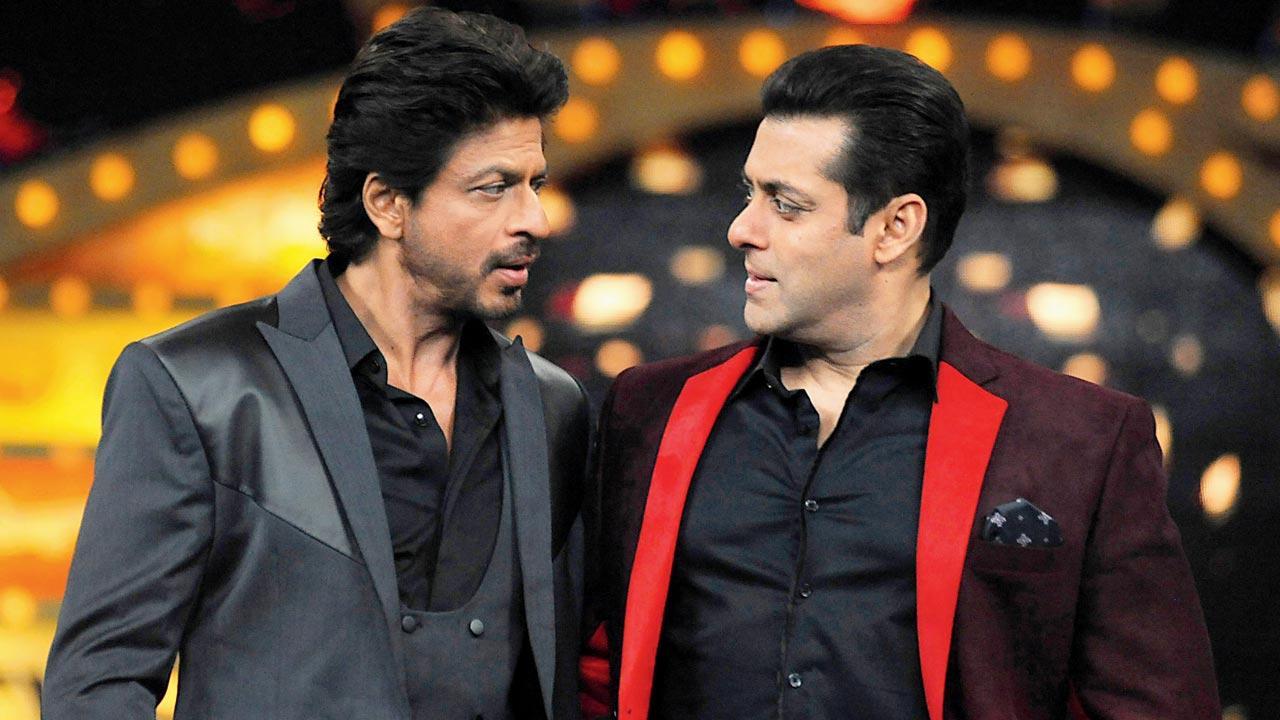
Shah Rukh Khan and Salman Khan had a brief fallout in 2008 at party hosted by Katrina Kaif. At the core of the fight was a proposal by Salman that the three Khans, who were seated at one table at the party, writes Bamzai. Pics/Getty Images
In 1988, when Aamir Khan made his massive “re-entry” into the Hindi film industry with the teen romance Qayamat Se Qayamat Tak, India was in the throes of a new order. “On the economic front, controls over electronic and computer imports were relaxed. A new education policy was being drafted. On the political front… the promise of the initial Rajiv Gandhi years had gone down the tubes with the Shah Bano case, the bungling over the Punjab Accord, the aborted Defamation Act [that made an attempt to muzzle the press] and worse, the allegations of kickbacks for recommending the Bofors gun to the Indian Army,” writes author and independent journalist Kaveree Bamzai in her just-released book, The Three Khans: And The Emergence of New India (Westland Non-fiction). Somewhere else Salman Khan, 23, had made his debut as Vicky in the film, Biwi Ho To Aisi, while Shah Rukh Khan, another 23-year-old, had people swooning over his deep dimples as Captain Abhimanyu Rai in the Doordarshan serial Fauji.
It almost appears serendipitous that three men of the same age, carrying the weight of a shared surname, in a changing India, where communal intolerance was simmering, even if slowly, were steering a grand entry for themselves in Bollywood, around the very same time. Bamzai says she found it remarkable that the troika, which began their careers together, are still going strong over three decades later.
Trending Stories
Latest Photos
Latest Videos
Latest Web Stories
ADVERTISEMENT
Mid-Day Fast
ADVERTISEMENT