Home / Sunday-mid-day / Article /
The making of international Bombay
Updated On: 01 May, 2022 08:05 AM IST | Mumbai | Jane Borges
At a panel discussion, author Sifra Lentin will dip into her research of the city’s trading past to discuss why it’s a perfect location for a financial SEZ





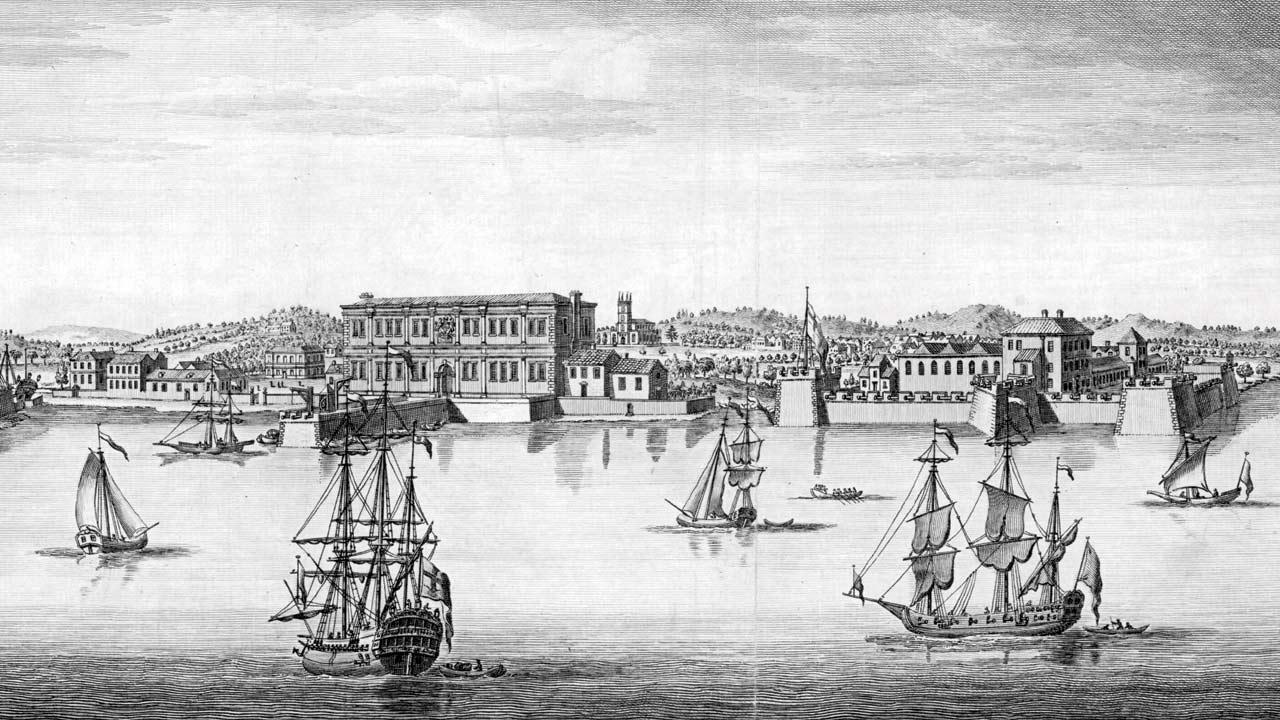
Bombay, circa 1754, East India Company of England’s port on the Malabar Coast of India, with Company trading vessels in the foreground and quayside warehouses and buildings behind. Pic/Getty Images
It was a 2007 expert committee report about making Mumbai an International Financial Centre (IFC), which first caught the attention of author-researcher Sifra Lentin. The committee headed by Percy Mistry, then chairman of the Oxford International Group, saw potential of making Mumbai a global city of enterprise, on the lines of London, New York, Hong Kong and Singapore. The report led Lentin to trace the international linkages of Bombay, which she felt could feed into this idea of the city as a suitable location for an IFC. The result is a just-released book, Mercantile Bombay: A Journey of Trade, Finance and Enterprise.
A Mumbai History Fellow at the foreign policy think-tank Gateway House: Indian Council on Global Relations, Lentin will share insights from her research at a panel discussion by Avid Learning. The panel, which will also include Dr Rashna Poncha, associate professor at the History Department, Sophia College; Bazil Shaikh, author and former central banker; and Mini Menon, author and co-founder and editor of Live History India, will discuss why immigrants and migrants chose Bombay, the many trade wars it survived and how merchant families helped the city transition into an important financial hub.
Trending Stories
Latest Photos
Latest Videos
Latest Web Stories
ADVERTISEMENT

Ganeshotsav 2026

ADVERTISEMENT