Home / Sunday-mid-day / Article /
From rap on knuckles to Pranayam
Updated On: 14 November, 2021 08:57 AM IST | Mumbai | Nasrin Modak Siddiqi
After some schools in the US report success over replacing detention with meditation, Indian educationists weigh in on the role of restorative justice in changing a child’s behaviour





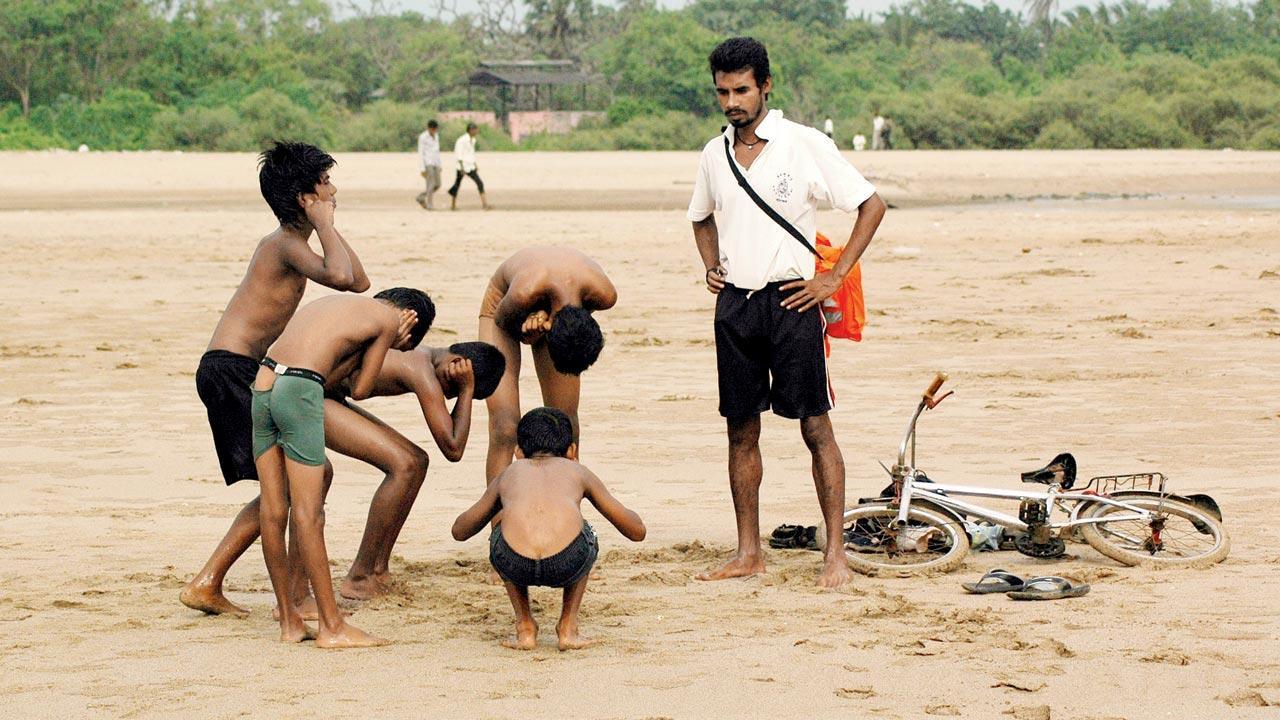
In this file photo, kids are made to do uthak-baithak by a lifeguard for venturing into the sea during high tide at Aksa Beach. Pic/Getty Images
Back in the day, incomplete homework, bad behaviour or mischief invariably resulted in being sent outside the class, facing the corridor wall and in worse cases, detention or suspension. Even though these punishments were designed to make students reflect on their actions, often, all they did was make them feel stupid. According to research by Dr Ruth Payne of Leeds University, detention detracts from the bond built on the foundation of respect and trust students invest in teachers. The relationship is further damaged when teachers call students out in front of their classmates, which is what makes punishment embarrassing and demeaning.
As times change, so have techniques on behaviour correction. Schools in the West are asking that instead of sending a child to the principal’s office for misbehaviour, why not send them to a meditation session that teaches them quick and simple mindfulness. Rohit Kumar, CEO of Kurla-headquartered Apni Shala Foundation, thinks it is first important to understand the larger plan that schools in the US may have while implementing this change. “Was it part of a more holistic shift in the way we look at and respond to student behaviour? Is there a promotive and preventive social-emotional development programme in place? Is meditation offered as a healing space for a moment of distress or conflict, and coming out of care and compassion for them, or is it a replacement punishment? We have to ask, what purpose was detention serving? If it was a response to a child’s behaviour, do we think that giving a different or ‘better’ punishment will solve the problem? Meditation is a great practice to build deeper self-awareness, present moment focus, and compassion. And for some, the journey towards mindfulness can start when things are not going well, but I wonder if as an institutional practice to offer it as a punishment for disruptive behaviour is the best way to introduce it to young people?” he argues.
Buy now to read the full story.
For any queries please contact us: E-mail: support@mid-day.com
Trending Stories
Latest Photos
Latest Videos
Latest Web Stories
ADVERTISEMENT

Ganeshotsav 2026

ADVERTISEMENT